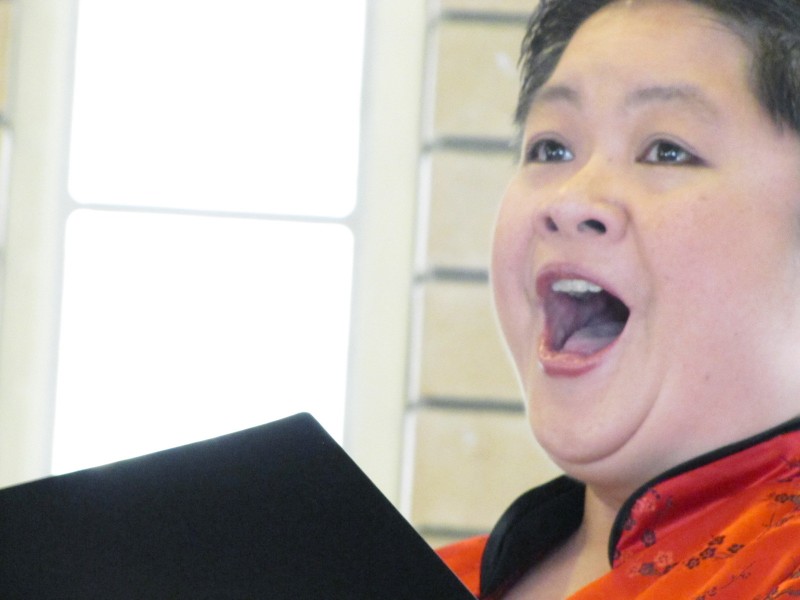
Click on this image! Helen Moore coordinated the final performance of the year in the High Court foyer series, and it was big. Long enough that it required an interval; complex enough that it required a running list; populated enough that there were instructions for where any performer had to be at any time. Two choirs; trumpets; piano; harp; singers; conductors. All spread throughout the space; necks craning to find where a song or fanfare or mediaeval ballad was sourced from. And what an audience! I came moderately early and noted the stream of people striding to the building. Inside, it was chockers, people on every surface with a view, unknowing passers-by peering through the glass walls during the show. And we could singalong. I love Christmas for the singing, although a little more church might help with the words and phrasing. Most singers got the common carols: While shepherds watched, Joy to the world, First nowell, O come all ye faithful, and the like.

 There was an Aussie carol that just didn't do it for me. The falling line in Ding dong merrily on high was a tongue twister with its vowel form. The finale of Handel's Hallelujah chorus was an invitation if you wished to join in, but it was more complex that I'd carelessly remembered. As for the performers, Trumpet club were fun and enlivening as always, with their clear, bell-like tones. They were a immensely joyous on fanfares and a blast when they entered on the final choruses of the carols. I particularly noted Byrd's Exultation. There were two choirs, Resonants and "Toby's choir" (I only have the running notes, not the program). I ticked Eatneman vuelie by the Resonants but there was more, including a take on David Yardley's Letabundus exaltet. Everyone loved Louise Page and Tobias Cole singing Twelve days after Christmas, a mirror to the days before with various damages done, cartidges to blasted partridges and the rest. Meriel Owen's harp was lovely but to largely lost to my ears in this big space with lots of audience to sop up the tones. I'd expected a smaller attendance - Canberra can get quiet at Christmas - but this was huge in every way. Just a measure of the success of these free concerts in the High Court foyer.
 Helen Moore presented Trumpet Club, Louise Page (soprano), Tobias Cole (counter-tenor), The Resonants, "Toby's choir", Phillipa Candy (piano), Meriel Owen (harp) for a Christmas concert in the High Court foyer.