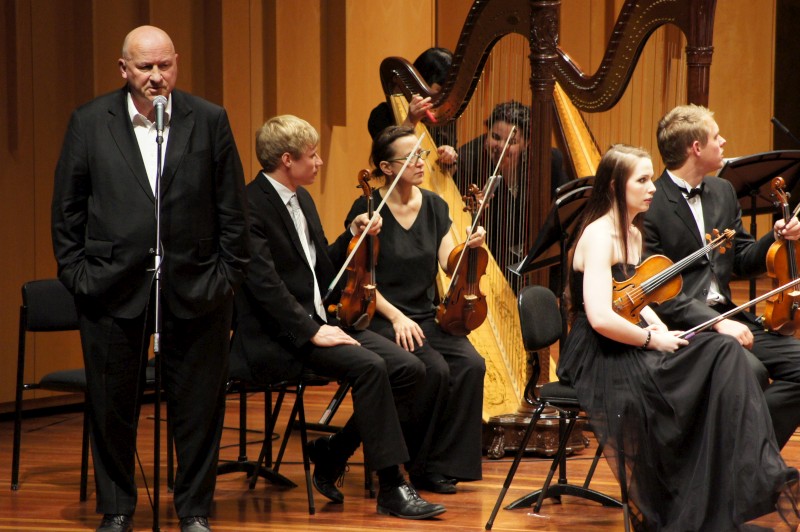
I've just been to hear Christina Lamb speaking to introduce her new book, Farewell Kabul : From Afghanistan to a more dangerous world, and I'm satisfied. Why? Because there was nothing that really surprised me. I've been worrying about the quality of democracy recently - of voters as uninformed, of politicians as self-serving and blinkered. It wasn't that I had my impressions changed by this discussion, by this veteran (in experience not age) foreign correspondent. Actually, her descriptions of the situation and the roles of politicians and the West and of the common humanity of people didn't conflict with anything I expected. And I don't think it's that she was ideological and I shared that ideology although she's of a post-Enlightenment and democratic world-view and that suits me fine. But she was informed and had contact with the place and people and the culture and she knew the story. She was critical of many aspects of the West's involvement in the Middle East, not least Bush and Blair (our own man of steel didn't get a mention) but she also disagreed ("a cynical view") with a questioner who saw the West's involvement as simply a means of pouring money into armaments industries. It's virtually always a mix of issues - ignorance, cockiness, money, influence, ideology and more - that underlies such tragedy. Some used to claim "it's all the oil" but I was always more comfortable with the less-dogmatic line "not just the oil, but would we have been there if there was no oil?". It's been a day of such awarenesses. An article by Krugman, who always speaks so clearly, arguing that The West in Iraq (under Bush) was "a mistake ... but worse... it was a crime" (Iraq war worse than a mistake, it was a crime, in Canberra Times, 20 May 2015, Times2, p.5). If you followed the story at the time, it was clear that WMD was not confirmed and the aftermath just proves that. This was one piece of evidence. Krugman offers more. And as for the status of democracy, another article looked at democracy in Australia and observed that "Winning elections requires a focus on the 'median voter' ... Median voters are assumed to be self-interested, short sighted and conservative, but also rational, family focussed and personally aspirational. This is common to many developed democracies" (Convergence theory explains the lack of choice in Australian politics, by Benjamin Reilly (Murdoch University) in The Conversation, 18 May 2015). Nothing unexpected in any of this, but there is disappointment and despair.


 Excuse the preamble; what did Christina say? She noted that Abbott had decided, when the Australians left Uruzgan, that the war was worth it. She wrote her book to consider this question. It's informed by her diaries of 28 years as an Afghan correspondent and by her awareness of the costs of the war. She spoke of her arrival, meeting contacts, of the Russian invasion and the US's support for the mujahedin. Of people she knew, places she visited, of fundamentalists and Taliban and the disastrous and confused situation at present. Of how Afghanis have changed, of their poverty (ave. 80 pence pd pp) and of the increased poppy production (increased 30X from when the US went in!) and of the status of women. That some good has been done (education, health) but that monies ($US1 trillion) were squandered on foreign consultants and the rest. And who thinks we are safer now? Of the wars that spread from Libya to Ukraine (whack-a-mole wars that pop up where-ever). She noted we are now going in again, this time against IS, the fourth time in recent history. Of Karzai's dress sense and inabilities, of the West's (arrogant) ignorance, of the tribal complexities and corruption (2 months of every year's income is estimated to be lost to bribes in Afghanistan). Of Pakistan playing both sides and of lack of trust. Of Obama's "drones as a substitute for policy". Of a telling Afghan saying: "the Devil fell in Kabul when he was expelled from Heaven". Of lack of action in Syria and other actions that produced a "breeding ground" for ISIS. Lessons? "Listen to people" and "be determined / seize opportunities", "get to know countries" and "create contacts". Blair still thinks going into Iraq was the right thing to do, but few others (except perhaps Jeb Bush given recent reports). Another factoid: $US1m was spent per soldier pa in Afghanistan as everything was imported.
So my outcome from this day and this talk? I guess it's satisfying to test your awareness and not find it wanting. But that doesn't bode well given my pessimism on many fronts: climate change, inequality, political influence and the rest. Christina Lamb launched Farewell Kabul : From Afghanistan to a more dangerous world at an ANU / Canberra Times meet the author event. William Maley convened. Christina Lamb, Afghanistan, democracy, William Maley