Younger locals up next. This was not the hive of virtuosity of the last sets but intriguing and true. Sonya, Rhys and Bonnie on vocals, guitar and drums. I heard dense forest, slightly threatening, rolling thunder of toms and mallets. Guitar played traditionally in place then dropped to the lap for bow and fingerpicking. Unearthly slides and drone voice. A clear and rich voice, more vocal than noise, slow, spreading. Taps on sticks against hardware or string ends, beads on drum skins, tapping, twisting voice. Voices of forests, African finger harp, metal bowl, deadened taps on guitar strings to whoops and cries. A credit card put to good use to damp guitar strings. Then a reprise. More mobile, at times drums verging on a rhythm, fingerpicked guitar that's sometimes chordal if distinctly atonal, structured vocals with hints of repetition almost echoing guitar. The staccato voice, scraped cymbals and, oddly and unexpectedly, some words (bit I missed them!). The band was Sonya Holywell (vocal), Rhys Mottley (guitar) and Bonnie Stewart (drums) out of Sydney.
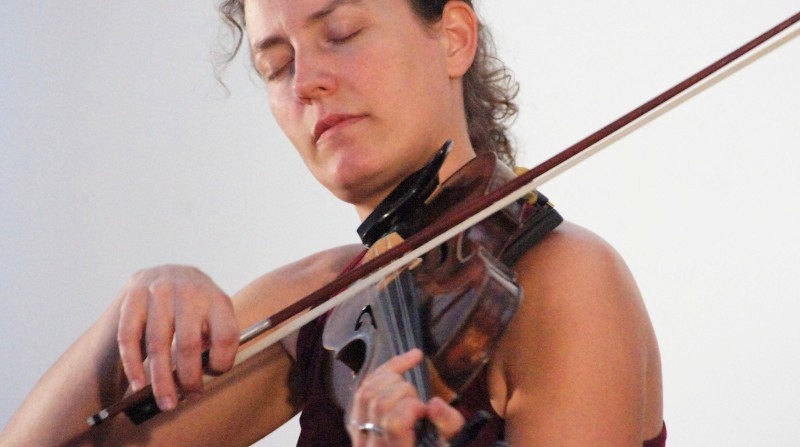
Then some Euro virtuosos: Irene Kepl and Christian Meaas Svendsen, violin and bass, Austria and Norway. From the top, this was massively energetic. It started explosively, violently with bass and accompanying vocalisations. Christian was all over the bass, feet, hands, knees surrounding and supporting the instrument, even playing with a dance-like step. Bent over, primitive as in some King Kong film. Then a feel somewhere around 6/8, that equally proficient and euphoric violin, bowed harmonics, superb atonal bowed playing, slow attacks and fast releases like some Beatles recording trick. This was a meeting of distinctly virtuoisic equals. Irene Kepl (violin) and Christian Meaas Svendsen (bass) are from Austria (Vienna) and Norway (Oslo).
Then a final collective improvisation to finish the night, Irene and Christian gradually joined by other players, building, swelling, moving, changing, interestingly those two voices of Guylaine and Sonya, till people started dropping out, standing aside and it ended for applause for the day one set two.