Showing posts with label Heather Stewart. Show all posts

09 November 2025

Gai Paris

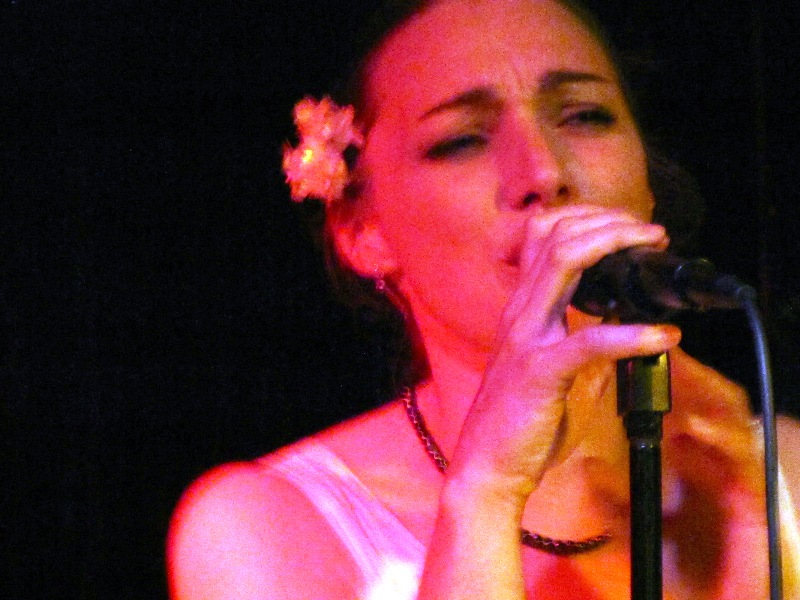
C'est vrai!  Paris is strong on jazz and, as I understand, also on earlier jazz styles and we have our own authentic Canberra-cum-Australia reps in the midst of that scene.  This weekend they were home to visit family and we caught them at Smiths, upstairs, in McGregor Hall.  Leigh Barker is the leader and also the Canberra person but now in Paris with Heather; otherwise Melbourne, the Coast, another Canberran and Latvia.  Latvia?  Well pianist Max Teakle was genuine Latvian on tour and he recognised local sit-in Valdis Thomann for his Latvian roots.  Paris can also be quite mixed and bohemian.  Whatever, this was hugely fun, inviting, joyous music.  Leigh leading with his gut strung bass; Heather with the most apt voice for this style and a good bit of playful pleasure and, to boot, violin.  Eamon just the part with an Elvis lick and overall presence and wonderful trumpet and Valdis hugely impressive as the trom offsider so comfy he seemingly had had a life lived in this very band.  And not least, Mark down the back setting and syncopating the tempo.  Just lovely.  Often slow, always rock solid steady, sometimes toungue-in-cheek implications, through a string of standards of Ellington and Frankie Valli and Billie Holliday and June Carter Cash and plenty of originals from Leigh and perhaps others.  All from their album that Leigh was indulgently spruiking on the night, Cross Street, in all formats (although only 7 vinyls available on the night).  Just great fun and great entertainment from a very professional outfit playing the era.

Leigh Barker (bass) led his band with Heather Stewart (vocals, violin), Eamon McNelis (trumpet), Valdis Thomann (trombone), Max Teakle (piano) and Mark Sutton (drums) at McGregor Hall, upstairs at Smiths Alternative.

20 December 2022

Visiting Paris

Paris comes to a backyard near you.  Aussie bassist Leigh Barker grew up in this house and performed a garden concert for friends of the family.  Leigh has ventured to Melbourne then to Paris with his singer/violinist partner Heather Stewart and they now have two young Parisians to fill the family but he still comes home every so often and plays tours and clubs and backyards and the like.  This time they'd also recorded in Melbourne.  I got to the backyard gig and it was something special, like our own jazz club with sun.  The day was good and the deck was new and stage-like and rang with taps and the piano could be rolled straight out into the open.  Leigh and Heather had Matt Boden from Hobart and Dan McLean from Michelago.  No drums, but the pulse was strong, the bass certain and voluble with the expansive piano and forthright trumpet.   There were plenty of quips and gasps and whoops shared in this style and the humour was skin deep but articulate and the groove was ever-present.   This is early jazz and not something I chase but a huge pleasure when done like this.  I was all tapping toes, as I should be.  Heather explained her new Guanieri-like violin's subtleties (essentially the Strad/Guanieri dichotomy but to all, I guess, it was pretty much unnoticeable without the two together) but the slides and delicacy were what mattered and her voice, so perfect for the era, just rang so, so true.  I think of Paris as a comfortable home for early styles (but not just: I heard Hadrien Féraud there and he's no slouch and nothing at all early).  They played WC Handy and Ellington and Fats Waller and Jelly Roll and Gershwin and even Rudi Valli and just one original, a dedication to a friend, Adriana, by Heather.  Not just another club gig but a bundle of joy of great musical skills and a huge pleasure.  Thanks to Leigh and Heather and Matt and Dan.

Leigh Barker (bass) led a quartet with Heather Stewart (vocals, violin), Matt Boden (piano) and Dan McLean (trumpet) in a backyard in Hughes.

13 July 2020

Ragtiming Paris

There's not too much international travel these days, but Heather and Leigh got back from Paris just at the start of the pandemic and they've been down the coast and dropped in to Smiths for a gig. Leigh is Leigh Barker, once local bassist trained here in Canberra. It's a story of a small world, but I know Leigh and his folks through multiple connections. Heather is from rural NSW but I first heard her in Melbourne. They have kids now and have lived in Paris for several years. But back here for the duration, I guess. Their gig was classic early jazz, perhaps the latest tune was from Irving Berlin in 1932. Glorious beauteous melodies, cute and nicely played on violin with guitar or bass, and sung by Heather with a firm and tailored voice intervening with her neat violin melodies with a lovely, understated vibrato and considerable body. There was one ragtime, this being a family-version of Heather's Dirty Ragtimer Duo, along with Maple leaf rag and Carter Family and Louis' Hot 5 and a string of lovely but often sad songs, like Old fashioned love and Lover come back to me and Say it isn't so (that's the Irving Berlin tune from a time when he'd lost much). So, a lovely, touching, period concert (it's arguable that much jazz is that these days) that had me tapping my toes with 2-feels. And some decent guitar and wonderful bass, not least with French bow, spelling 2-feels and early walks and beautifully self-evident and understated solos. It was a change to go to Smiths again, although sadly now sparse, separated listeners, but a pleasure none-the-less. For the audience, some returns; for Leigh and Heather, maybe some more returns, to Paris. Not sure when. But so nice while it lasted.

Heather Stewart (vocals, violin) performed with Leigh Barker (guitar, bass) as the Dirty Ragtimer Duo at Smiths.

22 January 2013

Two women, two violins, two singers

Two women; two violins; two singers; a largish band formed by a very long-timer who I’d hardly heard before; a sunny afternoon concert in the park. It’s not the recipe for an avant-guard, but it can be entertaining. I tend to come at these event with some trepidation, but it’s what most people know as jazz. And given the company and the easy afternoon and the touch of modern music and the well-played standards, I got won over. This was Bob Sedergreen’s Stonnington Jazz Showband and they featured two female singer/violinists, Fem Belling and Heather Stewart.

They played two sets, each with a few numbers from the band and a few from each of the singers. Their theme tune was a short take on Chicago’s 25 or 6 to 4, and from these first exciting lines my ears perked up. Then Miles’ Nardis. Nardis was a bit lumpy and heavy, but this is a band that gets together, without rehearsal, three times a year for these gigs. So said Bob. The band’s later tunes included Herbie Hancock’s Butterfly and it was lovely: uncommonly heard and delicate and relaxed. Bob introduced his saxist as leader of the Army band at some stage. That’s a very good reference. I liked his playing: tonal and slightly austere and harmonically precise; just the right riffs played just right. Very nice. The guitar also struck me as neat and sometimes touching on abandon, and trom was bell-like and well intoned and clear in solistic intention. Same for Mal, I guess Bob’s brother, who initially sounded clarinet-like but laid out some nicely sinuous soprano later. Perhaps it was on Sonny Rollins’ Oleo. Again, well known but also loved by the modern set. Bob himself divulged into dissonance at times, but he seemed mostly concerned with arranging the band in real time, eyes always looking around, never on the keys. Bass was e-bass so loud and proud with plenty of straight-forward, high pitched melodic solos and then third woman on stage, Sonja, drummer, was strong and steady and a ready soloist. I liked her insistent and apt playing.

They were hardly performing for the cognoscenti, so the singers presently easily popular tunes, but they remained authentic and attractive for anyone who likes swing. Heather opened with What a little moonlight can do and a lovely cut-time oldie, After you’ve gone, with clarinet and trad-ethos. Fem’s first set was Ellington’s signature Take the A Train and Dizzy’s Night in Tunisia which was later stylistically and more excitable aurally. The second set was Fem with a very challenging calypso vocalisation and then Ellington’s easily swinging Do nothing till you hear from me. Then Heather with No moon at all and Them there eyes. Then a finale with two violins on Zawinul’s slow funk standard, Mercy mercy mercy, and an old throwaway blues, Swinging shepherd blues. How interesting was this, to see these two together. Both are wonderful singers, both are classically trained, but how different are they! Heather is a lower and fuller voice (alto, I guess) presenting melodies with simplicity and a gloriously apt ‘20’s/’30’s tone and interpretation. Fem is higher pitched soprano, more busy and embellished and improvisatory adventurous. So different, but both so good. Even their violins were different: Fem’s is a 5-string Yamaha electric (low C); Heather’s is standard 4-string acoustic.

So, a warm day in the sun, a big free concert for the locals, a decent repertoire that was mildly educative and touching on adventure. You couldn’t ask for more in such a circumstance. Nice one. The performers were Fem Belling (vocals, violin), Heather Stewart (vocals, violin) with the Stonnington Jazz Showband comprising Bob Sedergreen (keyboard), Dave Palmer (trombone, vocals), Mal Sedergreen (alto, soprano), David Gardner (tenor sax, clarinet), Myles White (guitar), Jon Chidgey (electric bass) and Sonja Horbelt (drums).

05 November 2011

Big Bluesy Band

The chalk and cheese saga continued when I attended the Loft for the full New Sheik experience. Leigh Barker’s full band was there for a night of swinging, down-home dirty bluesy, hollerin’ jazz and it was great. This is a very good band playing music of an era that is is variously touching and refreshing and enlivening to visit. This is Billie Holiday passion, Ellingtonian intellect, Fats Waller bounce, blues growl and corn field holler. Great fun, touching or entertaining lyrics, and the biggest audience I’ve seen at the Loft. It’s an era that entertains and has a following, and this band does the job of promotion and can tickle an audience so deserve the following.

Leigh Barker is the new sheik himself, leading the band from his surprisingly loud unamplified bass (I’m pretty sure even this gig was not amplified). Quipping with the audience and choosing tunes at whim for the gig and the recording that was in train. Heather Stewart is the vocalist up front who also doubles on classically-trained, but down-home violin-cum-fiddle. She’s wonderfully touching when singing Billie Holliday and nicely growling on the blues. Both the horns, Eamon McNellis and Don Stewart were blow-outs. They both display a love of the older styles of jazz, so their solos are delicious and lively diatonic explorations of the chord structure, their playing includes the growls and glissandoes and tonguing that shout New Orleans, their harmonised backing licks are neat and clean and their collective improvisation was intelligent and together. And it wasn’t just old style: I noticed Eamon breaking from sweet diatonics into dissonance several times, but he’d equally sit easily on the most minimal of melodies and drain it for its beauty. And what lovely brassy tones they each had: clean, rounded, nicely articulated. Matt Boden led a few tunes in trio or smaller formats. I loved his simple statements and correct, clear interpretations of the underlying harmonies. And Al McGrath-Kerr was introduced as the band member with the longest name (the band was described as the “least single band I’ve even been in … in case anyone’s getting any ideas”). Al was open and quite minimal, dropping into loping marches or playing with rudiments and rolls.

I love Ellington’s Come Sunday, so that was a delight when they played it as a violin-led quartet. Billie Holliday featured in I must have that man and again in Moonlight and you and you could do nothing but empathise with the desperation. There weer joysome blues, often with the guys in the band hollerin’ responses to Heather’s calls. They played a Tom Vincent original, Big Creek wedding, with a cyclic, songbook structure. Nice to see our players playing tunes by their mates: we don’t just have to play the Real Book. There was an Appalachian fiddle tune that they jazzed up into swinging solos, and a blues tune that the audience voted for, Driving Ducks Blues. And the wit of Fats Waller’s Write myself a letter.

So, a busy night at the Loft, lots of fun, lots of good playing, lots of history and wit and a touch of nostalgia. And the night was recorded in the current full-bore, multitrack recording series that ArtSound is involved in, so we might hear it someday as a CD. I for one loved it. The New Sheiks are Leigh Barker (bass), Eamon McNelis (trumpet), Don Stewart (trombone), Matt Boden (piano), Al McGrath-Kerr (drums) with Heather Stewart (vocals, violin).

01 November 2011

Not quite midnight in Paris

This was a night of many pleasures. Delightful swing, performed with real authenticity in a studio environment in the company of friends … and a few beers. The band was a trio of Matt Boden, Leigh Barker and Mark Sutton, with singer Heather Stewart sitting in for a few tunes. The location was Mark Sutton’s working studio which was celebrating the arrival of a Yamaha C5 grand piano. The beer was Coopers.

This night had me thinking of a film I’d just seen, Woody Allen’s Midnight in Paris. It’s a light entertainment about a writer who time warps back to the artistic, bon-vivant era of 1920s Paris of Scott-Fitzgerald, Hemingway, Picasso, Miro. The author arrives at a fine party with piano-man Cole Porter singing tuneful witticisms to the delight of various onlookers. We’ve all heard these tunes, but like Woody’s author-alter-ago, we seldom get to truly hear them in the playful glory of these stylish but desperate pre-bop times. At least not with this authenticity. The piano was clear and acoustic; the bass was unadorned, unamplified, gut-strung and surprisingly loud; the drums were minimal and mostly brushed. They swung with real ease and joy. This was all on par, but it was Heather’s singing that really defined the authenticity to me. The songs of tender lips and moonlight - and the high and imploring voice that cut to bridges of womanly strength in disappointment - got closest to the era for me. I spoke to Heather later and she talked of Bessie Smith and how she was claimed by both blues and jazz followers. And how jazz is a respectful and intelligent art that knows its history and draws on it. So when she sang chromatic lines they were nowhere out of place even if not on Bessie’s songsheet. Authentic and timely singing. Matt is in Paris these days, which just maintains my deceipts here. He was obviously enjoying the re-registered and tuned piano, firstly with Monkish non-conformity, but also with simple joy in the delightful melodies of the American songbook. Leigh worked hard with a high action but turned out frequent bass solos of lively lyricism. Mark amused me when he asked “another swing?” for this was the nature of the outing, but he filled the role with ease on a little kit that was perfect for the job: just adequate to state the four lines/limbs of drumming: kick, sock, snare and ride. All in theme. You won’t be surprised to hear of this setlist: How deep the ocean, Body & soul, Stomping at the Savoy, But not for me, an Ellington blues. There were only two vocal tunes: Sit right down and write myself a letter and The moonlight and you, but always with what irony!

Being in a studio, the music continued even when the band stopped. They were recorded, of course, and we huddled around to hear the effect of different mics and mic placements. It was just a rough mix, but it sounded clear and detailed, although obviously lacking the sheen that effects and processing and mastering will give to the final product. Mark and Greg have a fine studio with decent gear, digital and analogue options, several decent spaces, the skills of experienced musicians-cum-engineers and that lovely Yamaha C5.

Matt Boden (piano), Leigh Barker (bass), Mark Sutton (drums) and Heather Stewart (vocals) performed and recorded for a small audience at Mark’s recording studio. Greg Stott engineered on the night.

10 January 2011

Wayback machine

Leigh Barker led the band in a few instrumentals before Heather Stewart came on stage, and I was thinking this is so far back … way back. This was a Billie Holliday tribute, so I knew it would be early in jazz history, but I was not quite prepared for the trad playing: two-feels and clarinet and strictly arpeggiated trumpet and four-on-the-floor guitar chords on What is this thing called love. The following tune was Old fashioned which was just confirmation. Then Heather came to the stage with Moonglow. A beautiful tune, of course, but continuing the era. All very much pre-bop. But these guys performed with panache, good humour and wonderful musicianship, so even this beatnick was taken by the end.

The songs were obvious and many have been done to death, but they swung and they had inherent humour which was just enhanced by Heather’s ever-joyous presence and occasional improvisation on the lyrics. How can you not like an era that produces lines like this: “Get your fingers off it / ‘n’ don’t you touch it / you know it don’t belong to you”. Nothing too opaque about that, although nothing openly stated either. And delicious numbers like After you’ve gone, or intense blues like Low down blues, or innocently optimistic larks like When you’re smiling, or nautically romantic songs like Sailboat in the moonlight or Slow boat to China. This was a great era for songwriting, despite some I still can’t take to, like All of me or Sweet Sue. I still have to learn to appreciate such informed silliness. Heather helped with her engaging humour but also with a sense of phrasing and variability of lyrics that spoke of the great singers. And she most easily led this band, although in a democratic way. It wasn’t rehearsed, she was open about that, but it melded, despite the negotiations on keys before a song, and the relaxed approach to the set list. But then these guys were good. The horns were great. I’d heard Eamon McNellis before and was not at all surprised. He’s got easy facility to play the changes with great clarity and with controlled tone (and thankfully, volume) but he could also let go, and with ample confidence. A long articulated pedalled note that led to flourishes, and later his ease with playing sustained eighth note lines, doubling to sustained 16th notes, then further doubling to sustained 32nd notes was seriously impressive playing, even at a relaxed tempo. Jason Downes completed the horns, mostly on clarinet but also on alto. I don’t often hear clarinet, so it imparts that old-time feel, with octaves and glissandi, lithe, snakey, bent thing that it is. But it sat nicely with trumpet for collective improvs, or improvising against a trumpet melody or less frequently playing melody with trumpet improv backing. Jason took a similar role with the alto, but I certainly found his alto solos more understandable for my ears. Collective improvisation is something modern players are toying with, and there’s lots to learn from this era. Otherwise, I just lapped up the lovely harmonies of a decent horn section, even only in two. That was so nice.

The rhythm section took me back further, though. Lynn Wallis was seriously into two-feels on drums. It’s true to the trad sound and Lynn played them perfectly well, but those trad fills and the grooves just don’t swing that much to my ears. Similarly John Scurry on guitar with banjo-like four-on-the-floor guitar comping and a very soft, unsustained, woody guitar tone. I enjoyed this well enough and particularly enjoyed the tone which I expect is of the era with no amplification, but it dated the music for me. Similarly the chordal solos with those fast strums and chord slides. All perfectly good playing from Lynn and John, but old-fashioned to my ears. (Thinking back, it’s strange how the timing for the overt parts, vocals and melody, was so malleable, while the underlying beat was so squared, but I guess this is trad and bop was to change that). Leigh was his capable and fully-toned best. Ably and clearly stating chords and not missing any passing changes. I was surprised not to hear slapping, but maybe it’s out of place in this context. His solos were always relaxed and lyrical, and I was impressed when he was toying with the melody of All of me in a different key and Heather called a bass solo and he could easily continue the melody with variations. It was only All of me and only G but that’s musical competence.

So in summary, I really liked this time travel by the end. The malleable timing, the good natured vibes, the relaxed tempos, the harmonies and collective improvisation and some very, very good playing went down a treat, even if the cut time feels and clarinet slides are still borderline for my ears. Moulding the fig is a work in progress for me, but with musicians like this, I’ll enjoy the apprenticeship.

Heather Stewart (vocals, violin) led a band with Eamon McNelis (trumpet), Jason Downes (clarinet, alto sax), John Scurry (guitar), Leigh Barker (bass) and Lynn Wallis (drums).