Showing posts with label SoundOut 2017. Show all posts

11 February 2017

SO2017-4

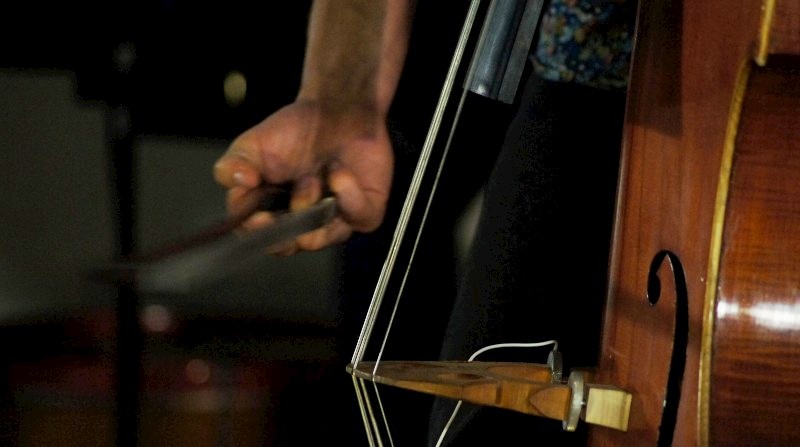
Next day at SoundOut, part way through the late session. First up was a quintet with Luiz and a series of locals, Chloe, Sonya, Gail and Miro on bass, toy piano and other toys, vocals, electronics and trumpet. Again, this was a meeting of musicians, an experimental jam, and it started with some hesitation, leaving space to hear each other. Until Miro spelt some melody and this was cathartic. Miro later said he's a melodist. It seems to me that trumpeters are: it seems to be a function of the instrument. But here were clear notes, spacious, with some relationship one to another. Luiz picked up on this, bowing, plucking, then alternative techniques of tapping, slapping timber and strings, reaction from Sonya, with vocalisations that filled and swelled around them, again Miro's bell-like notes. Lovely. Chloe and Gail were more subdued and ambient, encompassing this with various noises of various toys on the one hand, tapping or sliding or clacking, or using electronics to meld and twist and revisit, or to add processed voice and glass clinks and pats and thumps. Luiz Gabriel Gubeissi (bass), Miro Bukovsky (trumpet), Sonya Holywell (vocal), Chloe Hobbs (toy piano, toys) and Gail Priest (electronics) performed.

Then a stunner. French pianist Frederick Blondy returned for an overwhelmingly powerful final set. this was meant to end with other performers gradually coming on stage for a collective improv, but rather it ended alone, everyone overwhelmed by the power and purpose and sweeping adequacy of it all. Again, he started under the lid, with bow hair on strings and something that looked like a stick with a can on top, a few electronic bows (?) and I expect some other tools for preparation, then moving to the keyboard for growing intensity of handfulls of notes, tone clusters, increasingly flailing and jumping at the piano, this time with rhythm, to an intensity of violence and excess. Then a stop. He seemed a little surprised at that, as we were. Some minutes then applause. My camera gave out so no pics.

After a short rest, the collective improv to finish it all for this year. Most playing their standard style, but amusingly and informatively, right in front of me, was Christian Svendsen dissembling his travel bass as in performance, formal, slow, precise, ordered. I'd wondered how it came apart and now I'd seen it. Amusing. Then a fall to quiet, a packup, a party. The end of SoundOut incarnation no.8. Hopefully to return in 2018. And congrats to Richard Johnson for his drive and effort to make this festival happen every year.

10 February 2017

SO2017-3

Younger locals up next. This was not the hive of virtuosity of the last sets but intriguing and true. Sonya, Rhys and Bonnie on vocals, guitar and drums. I heard dense forest, slightly threatening, rolling thunder of toms and mallets. Guitar played traditionally in place then dropped to the lap for bow and fingerpicking. Unearthly slides and drone voice. A clear and rich voice, more vocal than noise, slow, spreading. Taps on sticks against hardware or string ends, beads on drum skins, tapping, twisting voice. Voices of forests, African finger harp, metal bowl, deadened taps on guitar strings to whoops and cries. A credit card put to good use to damp guitar strings. Then a reprise. More mobile, at times drums verging on a rhythm, fingerpicked guitar that's sometimes chordal if distinctly atonal, structured vocals with hints of repetition almost echoing guitar. The staccato voice, scraped cymbals and, oddly and unexpectedly, some words (bit I missed them!). The band was Sonya Holywell (vocal), Rhys Mottley (guitar) and Bonnie Stewart (drums) out of Sydney.

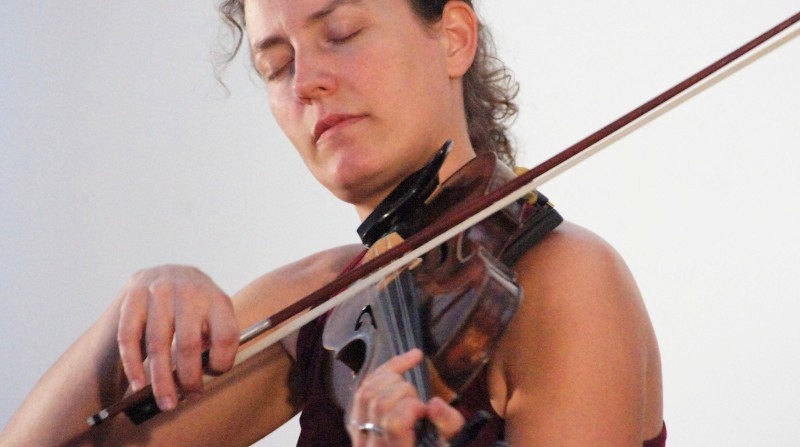
Then some Euro virtuosos: Irene Kepl and Christian Meaas Svendsen, violin and bass, Austria and Norway. From the top, this was massively energetic. It started explosively, violently with bass and accompanying vocalisations. Christian was all over the bass, feet, hands, knees surrounding and supporting the instrument, even playing with a dance-like step. Bent over, primitive as in some King Kong film. Then a feel somewhere around 6/8, that equally proficient and euphoric violin, bowed harmonics, superb atonal bowed playing, slow attacks and fast releases like some Beatles recording trick. This was a meeting of distinctly virtuoisic equals. Irene Kepl (violin) and Christian Meaas Svendsen (bass) are from Austria (Vienna) and Norway (Oslo).

Then a final collective improvisation to finish the night, Irene and Christian gradually joined by other players, building, swelling, moving, changing, interestingly those two voices of Guylaine and Sonya, till people started dropping out, standing aside and it ended for applause for the day one set two.

08 February 2017

SO2017-2

I was interested to hear the next outfit, RHRR Trio out of France, a formed band rather than a meeting of performers without a shared history. RHRR are Frederick, Guylaine and Xavier, piano, vocals and clarinet. Things got seriously interesting here. This was a meeting of minds with history and that history was evident, in their responsiveness, ease, purpose, those things that develop with time together. Various piano preparations, playing under the lid, bow hair drawn across strings for drones, various implements tapping or otherwise expanding sound, later some playing on the keys, sparse and open and with ill-defined time, plinks and bells ringing in the air. At the centre, a voice of unearthly quality and inventiveness. This was really the centre for me: voice is so central to our humanity, so much a product of our core. And what voice! Unearthly, yes, with whistles and squeaks, impossible sounds to imagine from a voice, but here they were. But then animal sounds, sounds of the wilderness, like listening with open ears in a primitive environ for a first time. Approaching, retracting, mobility and movement: very expressive in body and movement, often closed fists or swaying to and from the mic with closed eyes, every movement spelling the sound. Some meaningless words, too, pleading, although language-like voice is a rarity here. And Xavier on clarinet, responding, filling, mobile too, arcs as clarinet sweeps upward, providing structure and conversation. I was hugely taken by Guylaine with her intriguing and virtuosic vocalisations, but the whole ensemble was a gem. RHRR Trio are Frederick Blondy (piano), Guylaine Cosseron (vocals) and Xavier Charles (clarinet) out of France.

Solo bass up next, from Norwegian Christian M Svendsen. Throughout, his bass playing was strong, unrelenting, physical, visual, using feet and hands and up to three bows. This performance was not different. An unyielding German bow bouncing quavers at 190bpm for about twenty minutes varying in intensity, volume, changing tone through overtones despite little movement of the left hand, a foot to stop a string for one bow while the other hand bows otherwise, another bow played from the mouth. Strange but still those unrelenting quavers at 190bpm. One bow in a back pocket, taking the bass for a walk around that Drill Hall Gallery corridor just built for this purpose, audience listening to reflections from than coffered ceiling, more distant and muffled, then a return to the stage, then polyrhythms played by two bouncing bows, perhaps 5 over four. Still, after 20 mins, those incessant quavers at 190bpm. A feat of commitment, application, strength. Is this painful? Maybe. It's certainly memorable.

Christian M Svendsen (bass) played a solo set.

07 February 2017

SO2017-1

SoundOut 2017 is the eight incarnation of this most intriguing and challenging festival. Every year I contest my ideas over this abandon, this questioning of musical verities, this search for sound, noise, art from standard instruments (they mostly use standard instruments), this abandon on all manner of traditional musical verities (they seldom play standard techniques). It's an intimate festival and considerably international. I spoke to one performer who was touring, asking about her experiences with performing, to small clubs on tour, of the chance of performing around a more dense continent like Europe. But even there this remains a form for a small group of initiates or searchers. Despite the traditional instruments, it's not too often that traditional techniques are used, so you may form an opinion that these players can't play straight. It's true for some. I once asked a player about her performance on piano. In discussion, it turned out she didn't know how to play an Eb scale. Nonetheless, I'd been mightily impressed by her set. But that's not the case for all. I heard some warmups this time that were straight ahead jazz or classical styled and played with great skill. And Brazilian bassist Luiz who stayed with me for the weekend was advising me on how to play bossa. Bossa! That's as sweet as it comes.

First up was a string quintet of three (!) basses, violin and cello. Bass playing with feet, hands, taps, bow(s), staccato, notes, short snaps, whooshing of air over bows, bow woods on strings or timber, metal winding scraping strings. Cellist Freya pulled it together with some traditional techniques, slow clear notes forming atonal melody of long intervals, double stops, minor seconds with lovely bowed tone. Others found harmonies, then into experimental techniques again, drones, high harmonics, some vocalisation (whistles this time). Cello uses pencils between strings (a common technique) and non-trad techniques with bow. Squeaks of skin dragged over varnish, tappings, slaps, again a climax. Form and movement is evident here. I asked Luiz about starting strongly or tentatively. He consider that it's respectful to enter gently with players you don't know or haven't played with before, to listen better and not to hog the scene. But then the alternative of driving, determinative start can also work. Continuing, some excellent pizz from Norwegian bassist Christian although with strings pulled off the fingerboard for a deadened and edged sound. More form, start low-grow, reduce-deduce, rise-surprise. Loud again, intense, cello again spelling notes that define melody if little rhythm. This music is not a thing of groove: it sets and meditates and sits in time rather than states it. Presumably nothing is dissallowed, even trad techniques, but it's uncommon. People drop out, complete, applause and smiles. Starts and ends are often somewhat indecisive (reminds me of my penchant for getting in the final notes on bass).

Such was the first set, a string quintet comprising Christian M Svendsen, Luiz Gabriel Gubeissi and Ben Drury (basses), Irene Kepl (violin) and Freya Shack-Arnott (cello).