13 June 2010

Beat, b-box

I have to admit my ignorance. Hip hop is of another era, and I’m rather confused by the terms. I attended the Canberra heats for the Australian Hip Hop championships the other night. I’d expected rap and verse and perhaps the battles we saw in that surprisingly interesting film, Eminem’s 8 mile. But the main content was dance groups performing in that street style, reminiscent of Michael Jackson and moonwalking and the like. But there was also a smattering of other hip hop culture: some feature rappers, a beatboxer, a b-boy competition, and a DJ. I can dig the rappers with their down-to-earth street poetry. The beatboxers are amazing, sounding so percussively authentic. The PA’s gain is up high with distortion a-plenty for a fatter and more compressed sound, and that is obviously a secret. The b-boys are great to watch with their lithe movements and cocky interactions and handstands and the like. (Why no b-girls? There were none on the night.) I was interested that there were so many competitions, but maybe the b-boy comp was also part of the championships. I like DJs when the do something to the music, like scratching or looping, but mainly it’s just selecting CDs and matching beats and I fail to be excited by this. The skills seem elsewhere. The main part of the night was the dance sequences. There were a couple of groups in the Varsity level, and perhaps five at the Open level. Several were chosen to attend the national championships at the Crown Casino in Melbourne. I enjoyed the dancing. Good, wholesome, energetic fun and some cool choreography. Lots of friendly support between dancers and b-boys, despite the cock-sure, individualist reputation of this youth culture. The audience was engaged and friendly, and the excitement of the performers was real. My kids weren’t there, so I didn’t get quite so involved as some parents (there were quite a few parents there), but this was an interesting exposure to a perfectly presentable, if poorly respected youth culture. Much enjoyed, even if I felt just a little out of the scene.

12 June 2010

Milonga on air

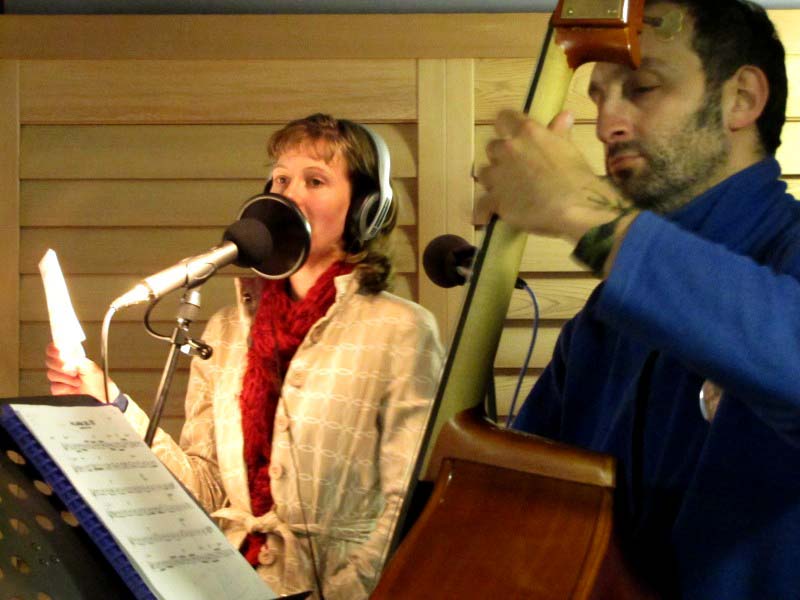
It was like a broadcast milonga. Tunes broken into tandas (that set of tunes for a tango dance) separated with cortinas (the disparate “curtain” music that allows the dancers to swap partners at a social dance, ie, at a milonga). So it was when Los Jovenes del Tango performed last night for ArtSound’s Friday Night Live. Actually, I’m cheating. I’d never heard of a milonga or a cortina (other than Cortina d’Ampezzo) before last night, but I’d heard some tango, and we all know how seductive it is (musically and otherwise). This music of the bordillos of Argentina is the music of prostitutes and the lower classes that was later taken on by French upper classes, and became an international music, impinging on jazz and classics. I’ve written on CJ of Marcella Fiorillo, Canberra’s wonderful link to Argentina, performing a tango opera of Astor Piazzolla, Maria de Buenos Aires. This was less formal and less classically-composed, but still ordered and complex with emotional crescendos, some unexpected time signatures and the inevitable words of passion. During the intermission interview, Natalya quoted one line: “I slit my wrists and bleed at your feet”. Not light hearted and not writing of the middle classes, other than perhaps their impassioned teenagers. But unlike teenagers with their passions, this feels true. This feels of backstreets and desperation. I can hear why people get so committed.

The band was an uncommon mix, too (as was Marcella’s Piazolla orchestra). The backing was Simon on a steady double bass and Liena on a classical pedal harp that performed various lines for guitar and others. There was no bandenoneon, but Valdis drew notes of heart-on-the-shoulder emotions from the bellows of an accordion and Lathika’s violin generously emoted each impassioned line. I particularly noticed both the violin and accordion for these intimately voiced melodic snippets. Valdis swapped for trombone at one stage and that fit nicely too. Natalya provided the voice. I found the tango voice strangely enervated but I expect that’s the nature of tango singing: a world-weariness that we also recognise in cabaret, perhaps a European equivalent with a similar dark history. But it’s lovely music of rhythm and passion but also with an end-of-time edge.

Los Jovenes perform regularly for milongas of the Tango Social Club of Canberra, so if you have always wanted to indulge in dancing this Argentinian passion, chase them up. Link below. Los Jovenes del Tango are Natalya Tacheci (vocals), Lathika Vithanage (violin), Valdis Thomann (accordion, trombone), Liena Lacey (harp, viola) and Simon Milman (contrabass).

  • Tango Social Club of Canberra
  • 10 June 2010

    Other than th’yarts

    I get most of my awareness of political and current affairs from radio (I love talk radio, esp. ABC Radio National). I’d been searching for some time for live radio, ie, seminar-type events around Canberra. A few have occurred in Canberra over the years, but The Australia Institute (TAI) has now established an ongoing series of monthly Politics in the Pub nights at the Uni Pub in its salubrious 3rd floor Lounge Bar. I learnt about it on the morning of the event from an aside in a Canberra Times article by Jack Waterford. This shows you how hard it can be to track down events (that’s why I started CJ). Someone mentioned that he’d heard of it through RiotACT, hidden amongst the masses of other content there. Whatever, it’s good to see we now have a regular PitP.

    Don Russell spoke on the decline of the US and touched on implications for Australia. DR was Paul Keating’s principal advisor and also an ambassador to the US, so his observations were informed. He spoke in the context of Paul Kennedy’s Rise and fall of the great powers. This book was published in 1989 and looked at relationships of the great powers from 1500 to 2000. He essentially found that state interactions were anarchic and egotistic, and that the world is constantly rearranging with victory going to the country with the strongest economy. Also that imperial decline (“overreach”) is not well received by states, which then indulge in more non-productive military expenditure, a less healthy economy, and a consequently accelerated decline. Don asked whether this changed after 1945 and the rise of the USA as the core superpower. He suggested “the US is different” because of the influence of the European Enlightenment at the time of its formation. In the US, “sovereignty belongs to the mass of ordinary people” rather than the state and this is locked into the constitution through balances of powers. Thus, the President is weak except for foreign affairs and defence issues, but also “America goes to war for a principle” rather than an interest. While this remains the case, the US will be afforded a leadership role in international affairs. DR recognised that this resort to idealism may collapse if resources or wealth are challenged (“if the economy turns bad, watch out”), but he noted that the US corporate sector remains in good shape despite the GFC, productivity continues to improve and innovation is “hard wired into the US system”. He also noted that you can expect a response if you attack the US, but that the US military is educated and “learns from its mistakes”. What of the environment? BRIC (Brazil, Russia, India, China) countries are rising as they’ve decided that the move of power to direct the economy from the state to individuals allows market/investment responsiveness, and that peace and stability is essential for this growth (“the opportunity cost of capricious behaviour” is high). This understanding is different from that of the imperial 19th Century. The US learns, and had learnt this, and thus didn’t repeat the imperial powers’ Treaty of Versaille after WW2, but developed a different agreement at Yalta. Given the above, “in the last 100 years, the world has become a better place”, improved from the picture of state anarchy and egotism outlined by Paul Kennedy.

    My thoughts? I was amazed by some stats. The US was the one country that came out of WW2 richer, and in 1943 the US was producing 1 ship per day and 1 plane every 5 minutes (!). I warmed to DR’s overall thesis. I don’t find the US quite the ogre it’s sometimes viewed by the left and I think that perhaps the current world is looking up providing we don’t destroy it through climate change, lack of water, resources, etc. But I also felt DR was too generous to the US, as have been several other US-history buffs from the Labor Party (eg, Kim Beazley, Bob Carr). I guess this is because the enlightenment political philosophy is attractive to social democrats (as it is to me). DR told a story of the British ambassador obtaining armaments for the Falklands War by speaking directly to the American people via TV from steps somewhere in Washington DC as indicative that “sovereignty belongs to the mass of ordinary people”. I can’t imagine citizen-influence through elections is really so different from ours, and DR had already stated that the President has most power in areas of Foreign Policy. The story was good, but seemed rather a big call as evidence. But then, he’d been an ambassador, and obviously took the story seriously. Otherwise, I thought the history of the US’s good luck which is said to explain their optimism (in easy expansion across a wonderfully rich country, in the War of Independence, in the resultant rapid rise as the superpower) was too little recognised. Similarly the extensive history of interventions by the US military (Instances of Use of United States Armed Forces Abroad, 1798-2007 / Richard F. Grimmett, Congressional Research Service, updated 2008). I expect the US is (relatively) idealistic in foreign policy because it can (or has been able to) afford to be. But then DR recognised that when he said “if the economy turns bad, watch out”.

    Suffice to say it was an intellectually invigorating outing and a challenging way to pass an hour or so. TAI’s Politics in the Pub sessions are held ~monthly and are free. Time is 5.30pm for 6pm start; talk and questions to 7pm, then chat to 8pm. To get on the mailing list for Politics in the Pub, ring Serena 0421 759 262.

    08 June 2010

    Tranquil Lakeside, not

    There’s always a touch of bent genius in the circus and often enough in composers. A challenge to the designed surroundings of Canberra and a rational APS. I was thinking this as I listened to Jono Lake’s Lakeside Circus. The music was all circus exuberance and jovial rhythms and riffs and bass lines, merged and manipulated and toyed with. Absurd, varied, jokey, malleable and entertaining. Entertaining: that word that musicians often forget at their own expense. Even between tunes it was a rollicking show. One tune was Candy Berry, obviously named for Canberra. Shouts of “I love Valium” and offers of solos “How ‘bout you … solos … [pointing]“ “Ready .. 1,2,1234”. This was loony tunes of the discordant harmonies. The out-of-tunality might sound like poor playing to uninformed ears, but it’s not like that at all. This is purposeful, but irony is the purpose. This is on the beat and square, boxy and tonally clashing, with just the odd touch of swing and sweet soloing to lighten the effect. This is not music to highlight performers, but music of composition. Jono’s the composer and concertmaster and performer out front (every circus needs performers). All excitement and urgent invention that dismays and constantly pushes his Circus. I noticed quotes from All the things you are and even Giant steps, but these are just that, quotes. The bebop as stride was more indicative of his style. There were mainstream solos from Max and Shane and John and Andrew, and some quite fitful but exploratory ones from Jono. But always that challenge to the comfortable and the overtly serious. Well practised to be rough as guts and hot as hell. I loved it. I tired a bit as the night wore on, so maybe it could have some more contrasting, tuneful interludes. I found the occasional break into a capable swing solo was a joyful release. But this was Mingus-like in the passion of the playing, and demands (even Mingal shouts) of the leader, the roughness and bluesy urgency and the playfulness. Refreshing, despite the demands it places on the listener. Lakeside Circus is Jono Lake (piano, compositions), Shane Spellman (trumpet), Andrew Fedorovich (alto sax), Max Williams (tenor sax), Patrick Langdon (trombone), Alec Coulson (bass) and Mark Levers (drums).

    06 June 2010

    Better old and new

    Free orchestral concert in Llewellyn? Wouldn’t miss it; better than those late night offers on TV. This was the ANU School of Music Orchestra. Presumably they are the students. They certainly looked young, but they played well and the program was a pleasant one, with just a little challenge. Firstly Gershwin’s American in Paris. It’s a popular work. From the top it was a hoot, literally with the sounds of car horns, and figuratively with big European city aliveness. There were jazz syncopations that represented the brash, brassy yank, and cute, bouncy litheness that was the Parisian surroundings. It was a Paris that’s perhaps not so obvious these days, but you saw it in films of the period. There was a second movement that was more in awe and wonder, then the elephantine statement at the third movement with its bluesy, laid back, Yanky statement. Lovely and joyous and wonderfully, almost visually, descriptive.

    Then followed the Piano concerto by Constant Lambert. This was not so well known, at least to me. It’s a work from 1924. I often find works of that period remind me of film. Presumably, the film composers at that time, and shortly thereafter were influenced by these styles. Megan was at a loss for a major theme. I found it attractive, in a Roman epic way. Earlier on, I thought of B-grade Roman epics and those strange cowboy-style horse chases they featured. Then mills and stream and brooks, then a denouement. Nicely played, and interesting, if somewhat typecast to my ears. Blame that on the commercial culture that also has me equating Carmina Burana with a brand of instant coffee. Anthony Smith was the pianist.

    There was an interval, then the last work: Dvorak’s Symphony 9 “from the new world”. This was the longest work on the concert, and another one that’s hugely popular. I could feel the optimism of the work, but it seemed naive to my modern ear. I enjoyed it well enough but it remained unrealistic. All this hope and beauty and optimism. The first movement seemed enamoured of mountainous scenery and the grandeur of the plains, while referencing Errol Flynn’s Robin Hood in my mind. The second presented human dimensions of wives and horses and the trail west, all hardship and tenacity, and even a touch of doubt, but never of flag or country. Then a waltz for the third movement - that was difficult to fathom as it seemed to hark back to the old world. Then a fourth movement of sound and fury and again those filmic horses. I’m disrespectful, but I find this music too romantic: serious but verging on treacle. We’ve lost such hope for the new these days, and this music seems to me to be lost with it. I don’t prefer John Cage, but I do respect informed doubt, a willingness to question orthodoxy, a certain world-weary wisdom. These qualities say old world to me, not the new world of this music.

    So what was my preference? Probably the Gershwin for its delightful mix of old world and new, and its open awareness and respect of the strengths of each. This was a wonderful balance of old and new and that’s the stronger path to the future. But it was a lovely program and a capable orchestra presented it. There were a few uncomfortable moments, but nothing to be concerned about. These are capable players who already provide a most attractive performance. And they are just students! I am in awe. Well done to the ANUSM and their lively orchestra and this amenable program. The ANU School of Music Orchestra was conducted by Mark Shiell. Anthony Smith joined on piano for the Lambert Piano Concerto.

    Takes one to know one

    Codgers had the most white- and grey-haired audience that I’d ever encountered. It takes one to know one: well attended, well enjoyed and good natured. None too deep, but its heart was in the right place. A group of five older men meet every week at the local gym for exercise, chin wags and Saladas. They reminisce about the war and complain about a changing, modern Australia. Then various events interrupt their routines: there’s a Chinese interloper who’s invited along one day; there are skirmishes between the Liberal and Labor voters; there’s even an unexpected GLBT theme (I won’t give this away), there’s a real estate deal that potentially flops and a death in the group. In the end, the group comes to better accept differences (racial, sexual, health), and gets on with its life. Interestingly, the Labor/Liberal stoush is in the context of the 2007 election (t-shirts proclaim “Kevin 07” and “Rudd’s a Dud”), so this is somewhat of a latter-day Don’s Party. (Given recent polls, it seems they were both right: 2007 was Rudd’s election and he subsequently became a dud). So, a nice play with a wholesome theme, a busy and entertaining dialogue, an interesting politico-social parallel and none too heavy. Of course, I couldn’t take pics. The pic is of a poster outside the theatre for another play, but it seemed strangely fitting.

    04 June 2010

    When the sky cries rainbows

    It’s always good to hear Sandy Evans, but this night was special. The evening started with a set from her trio, comprising Brett Hirst and Toby Hall. This was wonderfully impressive playing on a range of tunes. A few po-mo-influenced modern pieces that were ironic and entertaining platforms for some great soloing. The first was the night’s starter, Hungry Head Shuffle, with its loping jollity and wildly syncopated bass and open drums that moved into interrupted walks and otherwise played with sparseness. HHShuffle morphed somewhere during solos into Mountview. Then a raga played initially by Sandy on soprano sax against a sitar-like drone from what is presumably the Indian equivalent of a drum machine. I was surprised to hear Brett on bass soloing here, but it was informed and apt. Then an end with unison instruments playing a devilishly difficult head. I’d heard this raga before, when Sandy appeared at the Gods with Citizens of Earth. Technically, it’s mostly Phrygian, but any note is playable subject to some rules of repetition, so some notes can only be played once an hour. Sandy warned we wouldn’t get to these notes. The last tune was back to po-mo fun and Toby controlling solos with a whistle. James Greening came on for this tune and he obviously enjoyed the humour of it all, but it was also hot soloing. But for all this great playing, it had nothing on the second set.

    “When the sky cries rainbows” is a suite by Sandy lasting about an hour. I can write of it, but I didn’t take notes and its beauty and seriousness really have to be experienced. It comprises around a dozen pieces or themes that tell of personal tragedy around illness: the shock of diagnosis and coming to awareness; changing moods, depression and optimism; the journey to dealing with a major, irreversible illness; the strength of the ill person and the relationships of husband and wife in going through the experience. The rainbow is a symbol of hope, and the journey is ultimately hopeful but it’s an honest view of the strongest of emotions around despair and resignation and acceptance. Sandy’s trio was augmented by Miroslav Bukovsky, James Greening and Luke Sweeting for the work. There was a good bit of reading, and it’s not something they knew intimately, but the band played it with passionate embrace. I was stunned by Luke’s maturity in several important piano parts. By Miro’s beauteous strains of trumpet played to resonating piano strings. By James’ virtuosic fluency on trombone in various parts. By Sandy’s intent and honesty and openness, to speak nothing of her playing. By the congruent playing by Brett and Toby. It was not a large crowd in attendance and the music had some roughness from last minute learnings, but this was a work of honour and honesty and profundity that is rare in any medium. It was one to savour with closed eyes and sturdy emotions. If you get a chance to experience this, don’t miss it. I recorded so it should be on ArtSound’s Friday Night Live in the next few weeks or months. Keep an eye out for the broadcast and stay in for the night.

    Sandy Evans (tenor, soprano sax) led a trio with Brett Hirst (bass) and Toby Hall (drums). She supplemented the trio with Miroslav Bukovsky (trumpet, flugel), James Greening (trombone) and Luke Sweeting (piano) for “When the sky cries rainbows”.

    03 June 2010

    Our heritage

    We hear tell of Bernie McGann as a key person in our Australian modern jazz heritage, with biographies in print and film. But he’s here, and very much performing with the same intent and his unique voice. We had a chance to hear it again at the Gods on Tuesday. Bernie came with his quartet: Warwick Alder, Brendan Clarke and Andrew Dickeson. This is jazz that harks right back to bop invention but speaks also with voices following bop. Bernie played standards that we recognised, but were none too common: The breeze and I and Memories of you and a tune by Dizzy. I’d mostly place his originals (Spirit song, Brownsville and others) in the post-bop tradition, with latin feels and strong walking swings, but that unique, haunting, impassioned alto sound is unique and renowned and easily recognisable. Band-wise, I was taken by a few things. Those fabulously easy and pure harmonies on the heads from Bernie and Warwick. The way Bernie would meld the melody and Warwick would follow so closely. The long, but never indulgent, solos from all the members, so that the two sets comprised only six tunes. Their incredible ability to hold a slow tempo and space feel in their version of Eubie Blake’s ballad, Memories of you: this was truly musical art. As a band, they sat or swung with ease, but also with conscious purpose.

    Individually, they were wonderfully capable, of course, in solos and accompaniment. Bernie’s imploring alto that I mentioned above: mellifluous like honey, but not sweet; earthy as blown dust; ethereal as an unexpected shooting star; assured but allowing of doubt and ever forming, as true emotions are. Warwick was the other front liner, with a sinuous trumpet that merged so perfectly with Bernie on the heads, but veered into a very diverse style on solos. He was superbly defined in his statements, etude-like in his accuracy and clarity of purpose, precise in pitch and articulation. But I felt a real willingness to move the beat: well behind on some fast pieces for a bluesy authority, and over the beat for some ballads for a sense of urgency. His ability to form lines of eighth notes, then sixteenth, seemed unlimited: practised and precise, but never without purpose. That’s without even mentioning the way he grew each solo, controlling form and flow. Overwhelming trumpeting. Brendan’s just a war horse for swing with his enviable clarity of harmony and with never a passing chord missed. The notes weren’t unexpected, but they flowed with ease, and the expectation we had of each note was evidence of his skill. And then solos. One was truly sublime: a whole solo of double stops that was a thing of beauty. Others were more standard boppy outings. I noticed how they were quiet after the horns up front, but also how the audience was all ears to catch them. Andrew was the post-bop drummer: steady in time but busy; hard fighting and energetic; interjections that were more loud than sharp. Pushing his colleagues but ever ready to respond in kind. I felt Warwick particularly responding to his goading in solos.

    Great night. Bernie McGann (alto) led his quartet with Warwick Alder (trumpet), Brendan Clarke (bass) and Andrew Dickeson (drums).