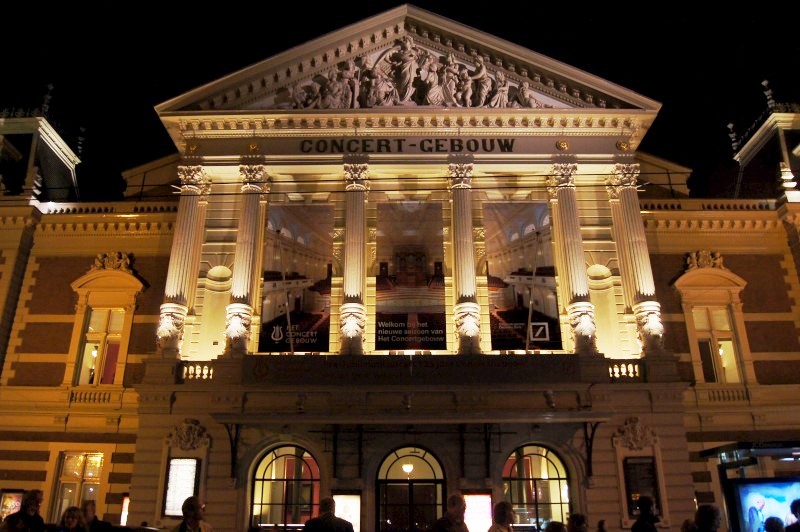
27 September 2012

Local jazz aristocracy

It’s confusing in a new town when you look for gigs. You have no idea what’s interesting or who to see. Luckily I crossed Reuben’s path and he pointed me to A-Trane this night. After checking out the website, it’s obvious that A-Trane is a significant club. It seems this is one on the touring circuit. So coming up in the next few weeks are Al Foster and James Blood Ulmer.

First set was by the duo of Japanese pianist Aki Takase and bass clarinetist Rudy Mahall. Now, I know the reputation of the bass clarinet as a difficult instrument and I had no idea of Aki T as a pianist, so I had no idea of what to expect. I got a fascinating and challenging outing with some pretty extreme, free explorations and wonderful technique. Rudy played the bass clarinet like the easiest of saxes running scales and arpeggios at speed and playing with all manner of harmonies and with the most chipper presentation. A joyful touch is not something you expect from the experimental scene. Chris suggested it’s a background out of cabaret. I have no idea, but it’s definitely attractive and endearing. As for Aki on piano, she was a place shaker to my ears. Sometimes swing or stride, othertimes the most brave and confronting dissonance. Ati can play some seriously intriguing music. They played a few Ellington tunes and some originals and Eric Dolphy and I think one Monk piece. They even played Take the A-Train, or was it their take renamed as U-Train (I missed most of the patter, given no German)? I didn’t hear the link to A-Train, but I guess it’s there. This was ecstatic and energetic and barrier-breaking music that was played with immense skills with confidence and appeal. I was intrigued and absorbed, when I wasn’t taking a rest from the demands of it all, for a sip of beer.

Second set at the A-Trane was the Schlippenbach-Walsdorff Quartet. Reuben had told me AvS is a significant name in the Berlin jazz scene and this is no understatement. He’s recorded profusely and led several large ensembles (Globe Unity Orchestra and the Berlin Contemporary Jazz Orchestra) and recorded a Monk “complete” works for one night). So this was an interesting, local experience. I heard this gig as in the style of the Jazz Messengers, so I wonder if he also plays this role in Berlin. Certainly, the music was similar. Hard bop, hard swings, played hard; head/solos/head, common structures, eg 32-bars. I didn’t feel the band gelled early on, but they were sitting nicely by the end. I heard Christian’s drums as immensely confident and forceful and youthful from the top: perhaps a rebel with a cause. Antonio’s bass was initially more reticent, but he strengthened and I particularly liked some later solos which were understated but clear and purposeful. The two others were doggedly behind the beat, especially early in the night, Alexander playing busy eighth-note lines and Henrik more sparse with a light staccato. I particularly liked some contorted melodies and unresolved endings and AvS is renowned also as a composer, so I guess they were his. The night ended with the two bands together for an encore. And as I write this, I learn that it was husband and wife together on the piano stool and that Rudy Mahall has featured I recordings by AvS. So this is local jazz aristocracy. Impressive.

Aki Takase (piano) and Rudy Mahall (bass clarinet) played the first set at the A-Trane club in Berlin. The Schlippenbach-Walsdorff Quartett featured Alexander von Schlippenbach (piano), Henrik Walsdorff (alto), Antonio Borghini (bass) and Christian Lillinger (drums) played the second set. They all played the encore.

26 September 2012

Best available Berlin Phil

Tickets for the Berlin Philharmonic here in Berlin are not nearly as difficult as I’d expected. If we were here another week we could be hearing them in their home concert hall playing Beethoven (for this read popular) and Wagner under Haitink. Sadly they are on tour this week. A free lunchtime concert was the fall back.

Nikolaus Römisch played cello and Kyoko Hosono played piano in Sergei Rachmaninov’s Sonata for cello and piano in G minor. This is a popular event! They counted entries by giving you a token on entry that you promptly dropped in a box. I’m told there were 1,500. I could believe it. They were sitting on steps, on the floor, arrayed over balconies, standing, even walking around discretely. Some were eve seated. It’s not the best environment for a classical work, but it was fairly well respected and we enjoyed it. Certainly the price was right. This is a work in 4 movements in G minor, variously modulating from 3 to 4 flats and ending with the last movement in one sharp, G major. The time signature also moved around over the movements. I got a triplet feel of 12/8 as the most prominent, but there were passages in 3/4, 4/4 ad 3/2 . Apparently Rachmaninov disliked it being called a cello sonata due to the equality of the two parts, and both Megan and I noticed the way melodies would pass between the instruments. I was noticing the rich capabilities of piano as it rippled and variously supported a cello line, but then cello also provided arpeggiated backings at other times.

Nice to have heard at least one concert at the Berlin Phil and a noble presentation it was. Just not so involving as a seat in a quiet hall with 120 musos blasting away. And also nice to feel the village atmosphere that Berlin is renowned for. I hadn’t believed this description, given its population of ~3.5 million, but then I ran into Reuben Lewis and Ronny Farella in the audience. It’s a small world after all. Nikolaus Römisch (cello), Kyoko Hosono (piano) performed Sergei Rachmaninov’s Sonata for cello and piano in G minor as a lunchtime concert in the foyer of the Berlin Philharmonie.

24 September 2012

Jam, no red lighting

Nothing laid back about this jam session. Dirk had said to go and it was a great recommendation. It’s been going on for yonks (was it 15 or 25 years?), it’s hot and sweaty and take no prisoners, it’s a fight to get to the bar or even to get in the door. But the beers are good. Dirk says there are tons of best Belgian beers on tap and I had one but couldn’t see enough of the bar to check how many others there were. The tunes were all the old Real Book standards, of course, but chosen for excitement and played for speed and abandon. These were top level players. There were some great solos and a milling of mates between tunes. Lots of horns, a few pianists, just one bass and drummer. I got the name of the bassist and will try to find out other names, but he was wonderful: Jacko Schoonderwoerd. He’s the right age so I guess Jacko is a tribute to Jaco and a comment on his chops. He was on acoustic bass, with chops a-plenty and interesting lines. There were plenty of modern harmonies and substitutions and flourishes from pianos and horns and just a touch of the older styles were evident from occasional more venerable gentlemen, but always with that jazz vivacity. There was one home-experimentation-test-bed of a trumpet with a panel of buttons and additional valves. Someone said it’s electronic and mentioned echo. In this contest he just played the standard three valves, and he was certainly no slouch either. Nice and noisy and central and not one to miss from 5pm on Sunday evenings at the literary Café de Engelbewaarder (translates as the Guardian Angel Café) on the Kloveneersburgwaal, near the Zeedijk (red light district) in Amsterdam. The originators and hosts are Jacko Schoonderwoerd (bass), Victor de Boo (drums) and Sean Bergin (tenor). Also Hans Leeuw (experimental trumpet), Robert Rook (piano).

23 September 2012

Magnificat

Emma commented before we left that we were going to party towns: Amsterdam and Berlin. Certainly, there’s a visiting population that parties in Amsterdam: young, stoned, sexed up. But I’ve also seen a liveliness and joy in living in the older locals. It’s strange to say this about the Concertgebouw but even stranger to say it about a concert at an austere Protestant church. Maybe it was the music, which was Monteverdi and Catholic or maybe it was the generous interval during a long work, but there was much congenial pleasure in the unrestrained chatter better the two sets.

We went to the Noorderkerk to hear the Amsterdamse Contorij and their Barokorkest, the Scuola Cantorum Amsterdam (singing Gregorian chant) and six singers perform Monteverdi’s Maria Vespers (Vespro della Beata Virgine). It’s a long work (~90mins) and it was performed with an interval. It sounds courtly and stately and features plainchant as a cantus firmus. It’s a new concept to me, but this cantus firmus chant states the themes for further development. The choir required for the Vespers is large as it must sing up to 10 vocal parts, split into two choirs and support seven voices (here 6 soloists). The chant and the solo voices sounded at home in this immensely echoey space. The voices seemed to grow as they held notes, then died away with waves of echo. What’s lovely for voice can be a mush for instruments or more complex parts and I did find it hard to follow individual lines when the musicians and singing were in full flight. But how they could fill such a space! Courtly and restrained sometimes, but also magnificent and blissfully forthright at others. Magnificent is an apt word for the baroque Catholic world and also fits this work given it features a Magnificat. The program gives a nice introduction to the work. “The Marian Vespers are structured according to the tradition of vespers as used in monastic liturgy, containing five psalms. These psalms, however, are monumental in scale and all combined with a so-called Concerto, written for soloists and instruments. The psalms are followed by one of the most remarkable movements: a Sonata to the litany ‘Sancta Maria, ora pro nobis’, an elaborate instrumental movement, with the Gregorian litany sung by the sopranos. After the Hymn ‘Ave Maris Stella’ the Vespers are concluded with the monumental Magnificat, like all other movements set to the original Gregorian cantus firmus.” (http://www.amsterdamsecantorij.nl/concerten_archief.php, viewed 23 Sep 2012) The orchestra appeared to be using period instruments. Certainly, there was a viola da gamba, a small boxed organ, a harpsichord, a thorbo (a bass lute with a 1.5m extension) and a row of trombones including at least one with two bells.

This was another magnificent musical outing on Euro soil performed for a local and knowing audience. As we set off, and as the audience mounted their bikes and departed in waves for the ride home, we mused on the good humour and conviviality in a profound musical setting. We were the unexpected tourist ring-ins at this event and loved it.

Claudio Monteverdi’s Maria Vespers (Vespro della Beata Virgine) was performed by the Amsterdamse Contorij and their Barokorkest, the the Scuola Cantorum Amsterdam under Marcel Ziljstra, and singers Marjon Strijk (soprano), Merel Kriegsman (soprano), Marcel Beekman (tenor), Harry van Berne (tenor), Jelle Draijer (bass) and Matthijs Mesdag (bass). Felix van den Hombergh conducted.

22 September 2012

Brahms in the local hall

It would (almost) have you believing in fate. Megan and I heard Brahms’ German Requiem at the Amsterdam Concertgebouw last night. We had been unable to attend Igitur nos’ performance of this work just two weeks before in Canberra (Latins sing German, CJBlog, 10 Sep 2012), but here it was being performed in one of the great concert halls of the world when we are in town. Tickets weren’t available on the Net but we were advised to try the box office, and sure enough there were a few remnant seats.

They were not the best: last row, behind and above the choir. Maybe the location gave the space its sound. We may have been in a bass trap corner. My first impression? The sound was anything but clinical. The eight double basses were deep and overwhelmingly obvious and the orchestra was not distinct. This was richly involving sound but not at all clinical or accurate, at least not where we sat. Perhaps that’s the nature of these older concert halls that predate modern acoustics. Certainly, this generous reverberation is valued by choirs. Sitting at the rear also changed the balance of voices and orchestra. The projected voices, the choir and baritone and soprano, were relatively quiet and almost lost at times. But in the quiet passages, how perfect were these voices. Such easy and accurate voicings; such clear and pure interplay of vocal parts. Some Igitur nos sopranos jokingly complained of high notes when I heard a rehearsal for this work. This choir just cut it: no strain or struggle at all. Several times a high note started a passage and every time it was just there. How good must these singers be? And the musicians were no slouches. Or maybe they were (but in the best way). I had a feeling of ease about this whole performance: no rush, no fluster, a daily outing. I don’t know how quickly this was conducted, but it always felt slow. I first noticed when the final note of a movement sat long, long, long.. What indulgence is this? It sat … and sat. Not one time but several. This is emotions wrung from the piece. It could so easily drop into immoderation, but it didn’t. It felt true although perhaps with some heart on the shoulder. But still, not tacky. I wonder if European music halls are like this. Big generalisation, I know, but these people live with it. It’s embedded in their culture. Just the feel of the Concertgebouw experience was like this, like an easy outing to the local hall. Your ticket covers free public transport for the evening. There are free coffees and wines and beers before and after the performance. The public spaces have rococo decoration and paintings and busts of famed conductors and sopranos and cellists, but the tables and chairs are from the local cafeteria. But the best: there’s a cloakroom, but also racks at the top of the stairs overflowing with rows of coats left by their owners. The standing ovation at the end includes a surge down the aisles. The bell-curved coughing between movements is the one downside I noticed of this attractive mix of expectation and easy informality. And finally, there’s an expectation at the start, with audience taking their seats and orchestra in place busily warming up. Amusingly, we entered at the front, and the choir was milling around with us at our entrance as we took our seats. I expect this is not a hall with lots of rehearsal space or backstage area. The box is what you get but the experience and the music are what matters. And this was a great experience, with a very satisfying work and wonderful performance that dripped with sentiment. Maybe it’s the work or maybe the performance, but this was not a requiem of despair. But none-the-less, I’ll treasure the memory of this night at the Concertgebouw.

The Brahms German Requiem was performed by the Koninklijk Concertgebouworkest (orchestra) and Groot Omroepkoor (choir) with Mariss Jansons (conductor), Genia Kühmeier (soprano) and Gerald Finley (bass).

21 September 2012

Sharing a musical language

I have no idea how you’d pronounce Badcuyp, but I didn’t feel uncomfortable there. Contemporary jazz haunts are the same the world over: laid back, beery but not threatening, predominantly males but not unwelcoming to women, committed to a demanding art form so just a little aloof and essentially serious. Badcayp is impressive if grungy. Two performance spaces, upstairs and downstairs. The lower one is the bar with central band. The upper one is more a concert space with lighting and decent sound but it also has its own bar. The whole is unconcernedly rough-edged but well fit for purpose.

I dropped in to Badcuyp to hear Giulia Barba perform the tunes she will record with this band over the coming weekend. All part of the preparation for the studio. Julia is Italian (Bologna) and has studied at the Conservatorium in Amsterdam. She composed the charts and performs them on baritone sax and bass clarinet with a septet she put together for this project. They were impressive. I enjoyed the lovely clear front line horn harmonies, solid grooves and running walks, occasional floating soundscapes of ill-defined pitch, melodies in various styles that played with unexpected pitches. There were some lovely ballads, some frantic accelerandos and respites, some fascinating structural movements and colour changes with various mixes of instruments. I loved one duo with the sharp tikita of tabla-vocals playing off against the sinuous bass clarinet, and another with these vocals and piano. I enjoyed a range of soloists. The piano was considered and tasteful with a sung accompaniment, although it could explode into release of fast and long passages. The alto was furious, seething, in constant motion. The flugelhorn was clear and bell-like and purposeful. I enjoyed one tune where the bass led in on solo against sparse three part horn lines, and ended in similar fashion. And just the breakneck speed of a walk that grew and faded in one tune that played with accelerations and decelerations. This was interesting writing that Giulia said she’s worked on for several years. The band was pulled together for this purpose and there was signalling and reading and struggles but that’s all part of the preparation for the recording. Quite challenging and broadly spoken and much enjoyed.

Giulia’s recording septet was Giulia Barba (baritone sax, bass clarinet), Sanem Kalfa (vocals), Gidon Nunes Vaz (trumpet, flugelhorn), Christian Ferlaino (alto sax), Sri Hanuraga (piano), Luca Dalpozzo (bass), Joan Terol Amigo (drums).

I also caught a few solos from the final tune of the preceding band when I arrived. This was the Michiel Stekelenburg Four playing music in the style of Scofield and Medeski, Martin & Wood and Soulive. Hot soloing, hard and manly, busy and loud. Sounding good but I heard too little of it. Just a pic. The band was Michiel Stekelenburg (guitar), Maarten Meddens (Rhodes), Thomas Pol (bass) and Salle de Jonge (drums).