04 February 2011

peon awaits

… this everyman. I fretted to miss peon at the Loft, but I knew they were playing next night so OK. Instead, it was a night of ‘40s folly, fashion, frivolity and swinging tassels and lightly salacious burlesque. This was the Darling Sister’s opening night for their new vintage fashion store, and it was grander than I’d expected: more people, more show, more period whimsy. I have a connection to the Darling sisters, of course: Darling Leanne provides her voice for The Gossips, otherwise who’d guess this dag would be seen there. But out it was with Megan and friend Kate, all dressed to our nines, amongst the dapper and the breezy and the cocktail waiters and the swinging and swaying burlesque tassels (pant, pant). Melina Fahrenheit and Tiffany Blue, no less! Why do girls get to wear all this stuff? But we guys get to watch so it’s not all bad. One warning, though: if you visit, look out for that spiv, Alfred Pettigrew. I don’t tie my trailer too well, but can so much fall off the back of a truck? The Darling Sisters shop is at Gold Creek Square, and it’s got lovely period fashion that’s available in all sizes for real women.

  • Darling Sisters on the Web
  • 02 February 2011

    Vamp

    I thought I had the Vampires sorted. Dub and reggae rhythms with highly syncopated melodies and some fairly short but very sweet and capable jazz solos. Despite their name and a relaxed readiness to settle on a groove and several clear vamps against drums solos, I didn’t particularly feel the Vamp-ires’ vamps defined the band. This was more a broad contemporary crossover. An all-ages band (tongue-in-cheek alert) appealing to jazz aficionados along with a pub set. There’s a lot of this around, partly to earn cash and partly to merge catholic interests of creative musicians into their more esoteric jazz studies. Nothing new, really: Diz crossed to latin; Miles crossed to rock; Herbie crossed to funk; Bad Plus crossed to grunge. Contemporary jazz is a melange and all the better for it. So I’d set them in the reggae camp, but there were the delicious trad-style collective solos, a fairly free outing during the second set and to top it off, a clear rock feel to finish. I’m chastened and promising not to put bands in boxes in future, but I’m elated. Great stuff and eminently entertaining and intellectually satisfying to boot.

    The Vampires are a quartet of alto and trumpet fronting bass and drums but this outing added a Melbourne mate, Shannon Barnett, on trombone. So the front line was that much richer in harmonies and solos and tonal and conceptual contrasts. Trumpeter Nick Garbett was a wonder, playing with embrochure and squeels and squeaks, or blaring with rapid-fire lines that flared easily over changing chords. He was a finalist in the recent Australian Jazz Award at Wangaratta for brass, so I’m not the only one to recognise these skills. I’d caught Shannon Barnett at Wang but not in so intimate a setting, and was looking forward to this gig. She didn’t disappoint. Her solos were authoritative and nicely developed, with clearly-imagined melodic lines, often as calls-and-responses, and displaying intervallic and rhythmic intelligence and rich with dynamics. Jeremy was on alto for the night, less proud and bell-like than the brass, but equally inventive and humanising the harmonies with the more carnal reed tone. This was modern jazz dissonance meets pop sensibility: medium tempo, mobile, constant, often atonal. Alex 1, Masso, was all eyes and ears, quiet and admirably controlled for a drummer, but constantly aware of his surroundings and playful with those out-of-synch reggae beats. Some deliciously odd little fills caught my attention as did several solos played against front line vamps. But as bassist, it’s no surprise that Alex 2, Boneham, was the vamp master of the night, holding some very demanding bass ostinatos. I was surprised that his bass was so present given it was not amplified. It was miked through the PA, but that had little effect where I was sitting and the bass was easily heard for solos and accompaniment. Some nice solos, too, reaching right up high then easily moving the length of the fingerboard with pleasant and talkative ideas. All this over original compositions from Nick and Jeremy. Lots of syncopation in the heads; some extra bars thrown in here or there; some vamps or easy chord changes; some fairly short spaces for solos. There was a love song, and a doleful tune for Haiti, and a playful song for a dancing mother, and a few that were just clever and attractive, with their mostly off-beat reggae grooves.

    Sydney met Melbourne via Jamaica with a touch of US and it was great entertainment and much satisfaction. A very promising start to another season of jazz at the Gods. The Vampires are Jeremy Rose (alto sax), Nick Garbett (trumpet), Alex Boneham (bass) and Alex Masso (drums) and good mate Shannon Barnett (trombone) sat in for the night.

  • Cyberhalides Jazz Photos by Brian Stewart
  • 31 January 2011

    Top 5 of 2010

    This is a piece I wrote for extempore. It's a great site, and has been a great (printed) journal, published by Miriam Zolin. I'm not the only one to present their top 5 - see others online from Mike Nock, John Shand, Roger Mitchell, John McBeath and others including a few Canberra locals, Keith Penhallow and Brian Stewart. Mine are pretty local and intimate and perhaps plebian, but the choices spell variety and richness to me. Fascinating!

    My Top 5 of 2010

    It’s an interesting task to collect my five most significant jazz experiences of 2010. I can revisit my memories easily enough through my blog (CanberraJazz.net), which is as much a record for me as reports for others, but the selection is the hard part. These are my most intense memories as I scan through my blog, but there’s an inevitable subjectivity. They may not be the most renowned players (viz. Shorter, Patitucci, Jamal, Marsalis aren’t included) but they are significant and they all said something special to me on the night.

    Steve Newcomb & Hannah Macklin Steve and Hannah visited Canberra from hometown Brisbane, which seems to be undergoing a cultural renaissance. Just a bar gig in a noisy environment, but I loved the intriguing lyrics and complex electronics that made a duo into a looped orchestra and harmonised choir. All confirmed on the CD which they were promoting. This is jazz training applied to electronica-cum-pop with considerable profundity.
    http://canberrajazz.blogspot.com/2010/01/delightfully-different.html

    Tina Harrod Spellbinding and touching singing with a fabulously capable and understated backing band of Matt McMahon, Jonathon Zwartz and Hamish Stewart. Somewhere in the area of R&B/soul but again with great jazz playing, including one of my favourite bassists (I have to admit that I play bass).
    http://canberrajazz.blogspot.com/2010/02/underneath-your-spell.html

    Roil An eye-opening visit to free playing. Chris Abrahams, Mike Majkowski and James Waples introduced one tune each and the developments were detailed and responsive and deeply communicated between musos and to the audience. I can struggle with minimalism and free, but this was clear and purposeful and deeply satisfying.
    http://canberrajazz.blogspot.com/2010/03/roil-not-my-ales.html

    Sandy Evans Trio Sandy started the night with her trio of Brett Hirst and Toby Hall, and these were great tunes and wonderfully played. But it was the performance of her CD-length suite, When the sky cries rainbows, that floored me. It comprises about a dozen pieces or themes that tell of personal tragedy around illness. It was obviously deeply felt and wonderfully played by a very sympathetic group. The trio was joined by Miroslav Bukovsky, James Greening and Luke Sweeting for my most touching musical experience of my year.
    http://canberrajazz.blogspot.com/2010/06/when-sky-cries-rainbows.html

    Anjali Perrin I visited London during the year and lucked on a great night of jazz. The first duo included a graduate of our own local Jazz School at the ANU, now playing the London theatre scene, pianist Mike Guy. The second band was a quartet led by singer Anjali Perrin with Ross Stanley, Davide Mantovani and Enzo Zirilli. The band was just thrown together but made up of some of the best on the London scene. I remember great grooves and intriguing solos, but especially intelligent rearrangements and reharmonisations of the most common of tunes (Autumn leaves, Love for sale, Never will I marry, etc) that played with the audience’s memories. These were standards performed with great invention and easy skills.
    http://canberrajazz.blogspot.com/2010/08/lucking-out-later.html

    That’s my five. But there’s so much more: Australian Youth Orchestra performances their summer camp; concerts by Jacam Manricks, Vocal Sampling, Vertical, Marcin Wasiliewski, Pan Francis, Java Quartet, Paavali Jumppanen and many others; Henry IV Pt 1 at the Globe in London under the rain; many gigs by local musos including staff and students at the ANU Jazz School and the performers at our Jazz Uncovered 2010. And thanks to the various players I perform with, because that’s the most fun of all: Brenton, Peter, Mike, Leanne, Richard, Monica.

    Eric Pozza is a long time jazz lover, bassist and author/editor for CanberraJazz.net

    26 January 2011

    Fr’OstralyaDay

    Pic courtesy of NASA

    I am not one for the flag-waving nationalism and the crosses to our soldiers in yet another war called by yet another powerful English-speaking ally or the sentimental tosh that goes with all this. It’s not the Australia that I know and it’s a pretty recent one, as I see it. Anzac Day, of course, suffers the same way, as pollies and ideologues use and abuse another national event. There was a time when Australia Day was just a laid-back day for barbie or beach or both with the family, and Anzac Day was a truly sombre memorial, but not now. Last night’s Australia Day Live concert outside Parliament House had some of this showy emotionalism, but also had some redeeming characteristics. There was a nice mix of cultures and a good feeling about it all and a decent and modern acceptance of aboriginality. The history of dispossession was glossed over, of course, but there was an inclusive feel for Australia’s first people. In fact, my favourite performance of the evening was by the Chooky Dances (of You-Tube Zorba fame), with their humourous poly-cultural dance sequence that blended Aboriginal and Indian dance styles. This clever presentation doesn’t surprise me. For a few years, I’ve been listening to Awaye!, ABC Radio National’s Indigenous arts and culture program, and it serves up a feast of interesting and optimistic stories of modern Aboriginal life. Otherwise, I found the music and dance pretty derivative, although Jimmy Barnes singing of Adelaide’s Largs Pier pub, a ‘70s haunt, with a harp and Irish backing was interesting. Ross Wilson’s joke that Eagle Rock was our third national anthem was said with rather more seriousness than it deserved. Jack Thompson appeared with his stories of outback Australia which don’t click with the far more common Australian urban life that I’ve known. Peter Allen’s songs were there as the eminently sentimental creations they are, but despite the schmalz (and the perverse fact that the writer of all this Aussie sentimentality was an ex-pat), I have to admit I like them: they are overwhelmingly memorable. The hosts did a decent job in a characteristically Australian semi-professional way. We watched it on TV, but perhaps the most noteworthy aspect of the night was the attendance: 35,000. This may not seem a big number (the MCG holds 100,018) but it’s one in ten Canberrans, so it’s big. In all, it was a pleasant and good-natured if derivative and uninspiring event. But thinking further, perhaps that’s just what an Aussie event should be.

    23 January 2011

    Blast!

    What a blast! Tito Puente Jnr and his band, Salcedo, have much musically in common with the jazz I hear - syncopation, groove, horns, origins, even some history - but the event was anything but. This was vibrant and physical rather than a cerebral gig: colourful sambas and bachatas and mambos, lithe and sensual dancing, loud and bombastic and so much fun.

    Tito is over from New York for an Australian tour backed by the Adelaide latin band, Salcedo. The theme is New York’s Palladium Club in the ‘50s and the music of Tito Puente (the father) and the nuyorkian samba craze. I don’t recognise all the styles of Afro-Cuban music. There’s a lot of complexity down south, far more than just languid bossa novas. My guess is there’s not a lot of understanding by jazz players outside the latin scene, but there’s little doubt that they are excited by it. I thought Tito said that Guancango is Afro-Cuban and it comprises three styles: mambo, malumbo and chachacha, but I may be wrong. Certainly there are numerous other names for latin styles if you read the literature, presumably each with their rhythms and formats. I expect this is a life-time work despite some deceptive simplicity.

    Tito led the band from the timbales, sticks in the air to gain attention, sometimes singing, often chatting and goading dancers and audience. The backing band was Salcedo, a respected latin outfit from Adelaide led by Hugo Salcedo. They were obviously concentrating, although the horns had time out for a few chuckles. I particularly noticed Mark Ferguson on piano and Shireen Khemlani on bass with eyes on charts and watching Tito sharply. As you’d expect, they didn’t get any time out, as these two are so, so important to the rhythm: the piano montunos, those infectious repeated two-bar phrases, over those bass claves that really define the AfroCuban experience by ignoring the 1 except for occasional band hits. Layered over this is the complex polyrhythm of the various percussion instruments: timbales, congas, bongos, and alternatively maraccas or guiro. Interestingly, no drums. Then horns (two trumpets, trombone and tenor sax/flute) stating melody and comping lines and some solos, and the clear and cutting sound of high latin male vocals. All this makes for an onslaught of busy, moving rhythms that demands a physical response. It’s a challenge to sit still for music like this. Add to that a dance floor of set piece displays and sensually animated couples, and you have that wonderful, infectious latin experience. Truly a blast!

    Tito Puente Jnr (timbales, vocals) led the Adelaide latin band, Salcedo, at the Hellenic Club.

    20 January 2011

    This is personal

    Second sets can often be the strongest, and that’s how I found the performance of Jeremy Rose last night at the Loft. It was actually a slightly strange night with a small audience and a band that must have been a bit disappointed. But I noticed during the second set that the band was different: more settled, unpressured, warmer, quieter, more free-flowing, easier grooves and interactions. Given little audience, you can play somewhat to yourself. There’s still some obligation, but it’s more intimate and personal, and anyway the audience was musos so they understood.

    This was a CD release tour and the music seemed to be all from the pen of Jeremy. It was a wide range of originals in various times and honest styles, feels and melodies. Well placed with passion, but also with location. Immersed in history, within the great modern tradition and touching on early modern, and located in place with clear references to Jeremy’s Scandinavian connections but also with new world energy and brashness. “Never wear red pants at a bull fight” was reminiscent of Mingus in tune and title, alternating between bass riff and walk, with a bluesy overlaid sax. “Prelude” was a smoothly flowing introduction; “In transition” was boppy modern against a rapid walking bass; “Avant garden” was in 14. Jeremy introduced “My space” as influenced by a composition teacher in Oslo who was interested in maximising ideas from melodic fragments considered as horizontal lines. The outcome was a 4-bar melodic snippet that mutated harmonically in 3/4 time. I enjoyed the harmonies in this music: gently moving and an interesting chordal base for solos.

    Jeremy has an easy fluency on alto and soprano saxes and an ease with dissonance that I noticed especially on the snake-charmer-like soprano. Jackson Harrison’s playing was sustained and sometimes fragmented, variously fighting the beat or riding it, stating ballads with sweetness or up-tempos with some contention. Abel Cross sat in for Alex Boneham on this tour and did a great job on some very demanding numbers. He was playing a stubby Czech-eze bass with a delightfully soft presence in accompaniment, although I would have preferred a bit more volume. James Waples was tellingly disjointed, inventive and apt. I enjoy the contemporary willingness to play away from standard sound mixes so I was intrigued with a passage of fast, free playing by bass and piano against sustained hi-hat patterns. James’ solo at the end on the night lifted the house in a crescendo of thought and power that incessantly grew to lift off then suddenly ended as he stopped to retrieve an errant bass drum. I’ve observed just a few players who can’t help but take off in solos and I think they must be naturals, or at least naturals in solo structure. This solo was like that.

    It was a strange night with that diminutive audience, but it lent it a unique presence. The event was somewhat disappointing, but in response the music was intimate and connected. Jeremy Rose (alto, soprano sax) led a quartet with Jackson Harrison (piano), Abel Cross (bass) and James Waples (drums) playing his own compositions at he Loft. Jeremy returns to Canberra at the Gods in a few weeks’ time with the Vampires. And don’t miss anything at the Loft: it’s infrequent but it’s the most adventurous modern jazz around town at the moment.

    17 January 2011

    Doggy tea

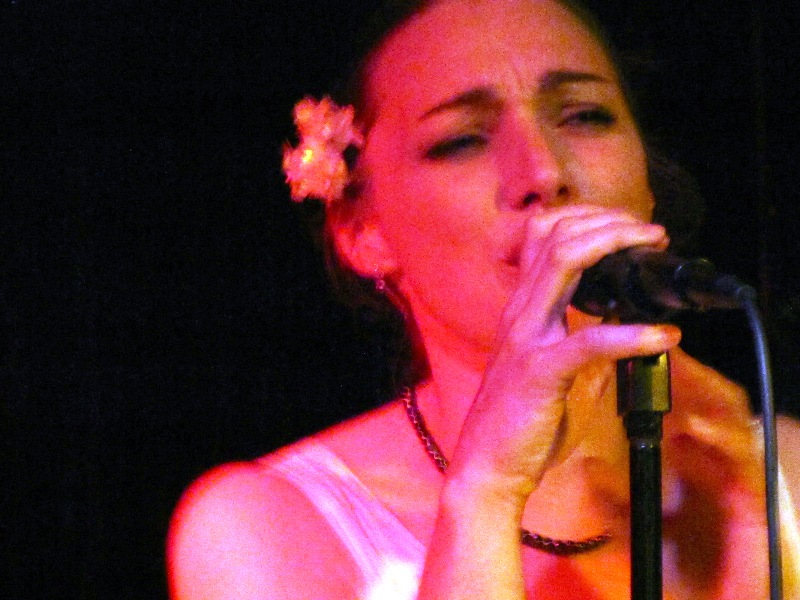
    Another nicely relaxed gig at Adore, this time with the Gossips vocal quartet. For that, I mean Gossips without sax; just piano, bass, drums, vocals. Mike expanded his role with some acoustic guitar on some bossas, and also a surprisingly effective voice on a bluesy number.

    But it’s the community at a relaxed gig like this that’s fun. I met a retired bassist (Ray Newland from bands The Midnight Five and The Newlanders) who shared the same Melbourne musical scene as the Seekers before their fame. And the cutest of young girls: an 8-week old miniature black and tan dachshund. The human babies I saw were also cute, but we have a dachy at home (Chips, ~10yo) and we’re suckers for him, so any dachy’s a friend of mine. Just one pic - I promise.

    16 January 2011

    Oh, woe, Taronga

    Thinking Monkey by Petr Kratochvil

    It’s Twilight at Taronga but my woes fit. I’m not the only one to complain about the state of pop music, rehashing classic rock and the rest, but this one stunned me. I was looking at the Sydney Morning Herald entertainment pages this weekend and found Twilight at Taronga. Look at the lineup over 12 nights: Yvonne Kenny; Beatlemania; Bjorn Again; Caroline O’Connor; 80s night; Salute to Van Morrison; Stones Tribute; Forever Diamond; Cliff & Dusty; Tribute to Fleetwood Mac; James Morrison does Motown. A wall of tributes. Now, I’m not a purist and I recognise that musos have to eat, but this is disappointing and stunningly unadventurous. I’m not nasty enough to call it a festival of fakes. I thought maybe a tintinabulation of tributes fitted: light and suburban clean (hoping not to discourage the bell-ringers amongst us). Just to prove I’m no purist, I can say I’ve seen Bjorn Again, and enjoyed it and I think ABBA were a wonderful pop band. I also heard the Beatnix years back and I was enthralled. Moptops before the interval, and Sgt Peppers costumes after; genuinely accurate renditions; even harmonies by the right singers, so mockPaul sang Paul, mockJohn sang John; same guitars, Ludwig drums, Hofner violin bass, even mockPaul playing lefthanded (!) and no recordings that I noticed other than some help for Day in the Life, but how could they do the final pianos without it. I loved it! But a festival of tributes? Just too, too far for me.

    10 January 2011

    Wayback machine

    Leigh Barker led the band in a few instrumentals before Heather Stewart came on stage, and I was thinking this is so far back … way back. This was a Billie Holliday tribute, so I knew it would be early in jazz history, but I was not quite prepared for the trad playing: two-feels and clarinet and strictly arpeggiated trumpet and four-on-the-floor guitar chords on What is this thing called love. The following tune was Old fashioned which was just confirmation. Then Heather came to the stage with Moonglow. A beautiful tune, of course, but continuing the era. All very much pre-bop. But these guys performed with panache, good humour and wonderful musicianship, so even this beatnick was taken by the end.

    The songs were obvious and many have been done to death, but they swung and they had inherent humour which was just enhanced by Heather’s ever-joyous presence and occasional improvisation on the lyrics. How can you not like an era that produces lines like this: “Get your fingers off it / ‘n’ don’t you touch it / you know it don’t belong to you”. Nothing too opaque about that, although nothing openly stated either. And delicious numbers like After you’ve gone, or intense blues like Low down blues, or innocently optimistic larks like When you’re smiling, or nautically romantic songs like Sailboat in the moonlight or Slow boat to China. This was a great era for songwriting, despite some I still can’t take to, like All of me or Sweet Sue. I still have to learn to appreciate such informed silliness. Heather helped with her engaging humour but also with a sense of phrasing and variability of lyrics that spoke of the great singers. And she most easily led this band, although in a democratic way. It wasn’t rehearsed, she was open about that, but it melded, despite the negotiations on keys before a song, and the relaxed approach to the set list. But then these guys were good. The horns were great. I’d heard Eamon McNellis before and was not at all surprised. He’s got easy facility to play the changes with great clarity and with controlled tone (and thankfully, volume) but he could also let go, and with ample confidence. A long articulated pedalled note that led to flourishes, and later his ease with playing sustained eighth note lines, doubling to sustained 16th notes, then further doubling to sustained 32nd notes was seriously impressive playing, even at a relaxed tempo. Jason Downes completed the horns, mostly on clarinet but also on alto. I don’t often hear clarinet, so it imparts that old-time feel, with octaves and glissandi, lithe, snakey, bent thing that it is. But it sat nicely with trumpet for collective improvs, or improvising against a trumpet melody or less frequently playing melody with trumpet improv backing. Jason took a similar role with the alto, but I certainly found his alto solos more understandable for my ears. Collective improvisation is something modern players are toying with, and there’s lots to learn from this era. Otherwise, I just lapped up the lovely harmonies of a decent horn section, even only in two. That was so nice.

    The rhythm section took me back further, though. Lynn Wallis was seriously into two-feels on drums. It’s true to the trad sound and Lynn played them perfectly well, but those trad fills and the grooves just don’t swing that much to my ears. Similarly John Scurry on guitar with banjo-like four-on-the-floor guitar comping and a very soft, unsustained, woody guitar tone. I enjoyed this well enough and particularly enjoyed the tone which I expect is of the era with no amplification, but it dated the music for me. Similarly the chordal solos with those fast strums and chord slides. All perfectly good playing from Lynn and John, but old-fashioned to my ears. (Thinking back, it’s strange how the timing for the overt parts, vocals and melody, was so malleable, while the underlying beat was so squared, but I guess this is trad and bop was to change that). Leigh was his capable and fully-toned best. Ably and clearly stating chords and not missing any passing changes. I was surprised not to hear slapping, but maybe it’s out of place in this context. His solos were always relaxed and lyrical, and I was impressed when he was toying with the melody of All of me in a different key and Heather called a bass solo and he could easily continue the melody with variations. It was only All of me and only G but that’s musical competence.

    So in summary, I really liked this time travel by the end. The malleable timing, the good natured vibes, the relaxed tempos, the harmonies and collective improvisation and some very, very good playing went down a treat, even if the cut time feels and clarinet slides are still borderline for my ears. Moulding the fig is a work in progress for me, but with musicians like this, I’ll enjoy the apprenticeship.

    Heather Stewart (vocals, violin) led a band with Eamon McNelis (trumpet), Jason Downes (clarinet, alto sax), John Scurry (guitar), Leigh Barker (bass) and Lynn Wallis (drums).

    09 January 2011

    Bundle of joy

    These are the local joys that visitors only happen on, or get invited to. I’d talked to Rajiv Jayaweera the night before, at Paris Cat, and he invited me to a beer garden gig with Ben Hauptmann at Brunswick Green on Sydney Road. I was interested. Guitar and drums, no bass, with a favourite guitarist. And it was bliss. I only caught 30-minutes, but this was great. Coopers on tap; a vibrant beer garden scene in a cosmopolitan area; wonderfully threatening weather; Ben’s richly looped guitar/s, two, three, four layers with crisp or overdriven solos blaring away on top, and a joyous communication with Raj. Lots of smiles; plenty of indulgent playing that was bliss to anyone who bothered to listen. I like a listening environment, but I also like quality background music where players are a bit self-indulgent, playing to their wishes and inevitably to their strengths. I was just reading something on this in extempore. A muso was describing how his best playing is often that when he most seems to be ignoring the audience. Now, musos can be lazy, ignoring the audience and also their playing. But this was one of those good gigs, where the musos play for themselves and incidentally for the public and it’s great. Twangy, screaming, swinging, whatever, this was played true to style, simply correct, easy and unforced, masterfully. A wonderful outing. What tunes? It finished with C-jam blues, that simple but masterful melody that appeared several loops into the tune to smiles on my part. Other tunes were more chordally complex and with that Hauptmann rockabilly presence, so presumably originals. Whatever, it was a small bundle but a stork-like bringer of joy.
    Ben Hauptmann (guitar, loops) played with Rajiv Jayaweera (drums) at the Brunswick Green.